




Carabiners for Construction Work: The Connectors of Compliance and Safety
In the high-stakes environment of construction, carabiners are not mere accessories but critical, life-sustaining components of fall protection and rigging systems. Their selection and use are governed not by preference, but by stringent regulatory standards and the uncompromising physics of arresting a fall. Understanding the distinct requirements of construction-grade carabiners is essential for ensuring compliance, preventing workplace injuries, and saving lives.
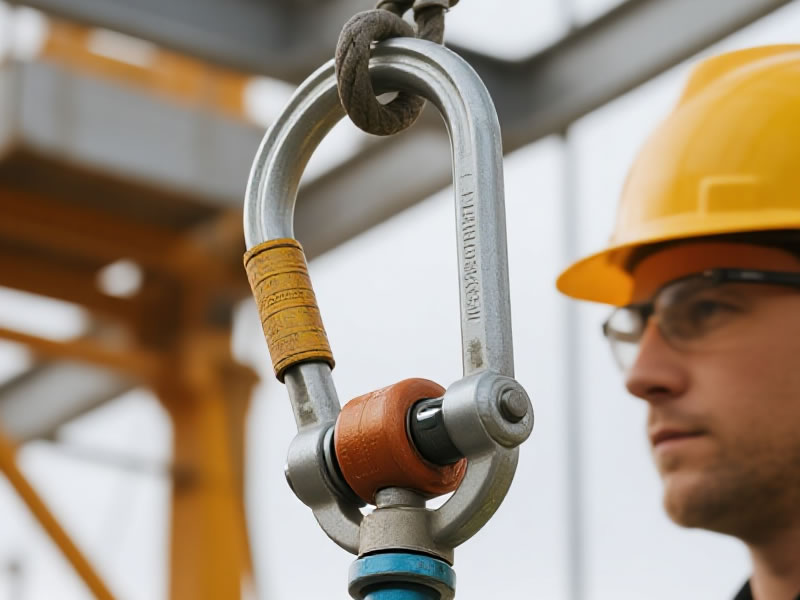
The Non-Negotiable Difference: Industrial vs. Recreational
The most critical principle is this: Carabiners designed for recreational climbing are not certified or suitable for construction fall protection. The environments, failure modes, and legal requirements are entirely different.
- Construction/Industrial Context: Involves static or shock loads from falls, exposure to harsh chemicals, abrasion against steel and concrete, and a regulatory framework (OSHA, ANSI) that mandates specific certifications.
- Recreational Context: Designed for dynamic climbing falls on clean rope, with a focus on weight savings. They operate under different safety norms (UIAA).
Using a climbing carabiner on a construction site is a violation of safety regulations and an extreme hazard.
Mandatory Standards and Certifications
Construction carabiners must be part of a certified fall protection system. Key standards include:
- ANSI Z359.1 (USA): The American National Standard for fall arrest systems. It specifies requirements for connectors, including minimum strength.
- OSHA Regulations (29 CFR 1926.502): The U.S. Occupational Safety and Health Administration mandates that all fall arrest equipment, including connectors, meet specific strength and performance criteria. Using ANSI-compliant gear is the primary way to meet OSHA requirements.
- CE EN 362 (Europe): The standard for "Connectors" in personal fall protection equipment.
A compliant carabiner will be explicitly marked with its relevant standard and a unique serial number for traceability.
Critical Features of a Construction-Grade Carabiner
- Material: Forged Steel or High-Strength Alloy Steel.Why: Steel provides the necessary abrasion resistance against I-beams, concrete edges, and rebar. It also offers the ultimate strength required to withstand fall arrest forces (typically 5,000 lbs/22 kN minimum). Aluminum is almost never used for primary fall arrest connectors due to its softness.
- Strength Rating: High Minimum with a Massive Safety Factor.The minimum breaking strength for a fall arrest connector under ANSI Z359 is 5,000 pounds (22.2 kN). In practice, high-quality construction carabiners are rated between 25 kN and 40 kN (5,600 - 9,000 lbs). This accounts for the immense force generated during a fall arrest.
- Locking Mechanism: Auto-Locking (Double-Action or Triple-Action).This is the industry standard. A double-action (press-and-hold) or triple-action (push-twist-pull) lock ensures the gate cannot open accidentally from brushing against structures, tools, or ropes. Screw-gates are less common as they rely on worker diligence to lock them every single time.
- Design for the Job:Large, Smooth Profile: Facilitates easy clipping to anchor points and D-rings, even with gloved hands.Oval or Pear Shape: Common for connecting to harness D-rings and anchor eyes, as they accommodate various connection points without cross-loading.Corrosion Resistance: Often features a hot-dip galvanized or stainless steel finish to resist rust from weather and jobsite contaminants.
Primary Applications on the Construction Site
- Personal Fall Arrest Systems (PFAS): The carabiner connects the worker's harness dorsal D-ring to a shock-absorbing lanyard or a self-retracting lifeline (SRL). This is its most critical life-saving function.
- Anchorage Connectors: Used to connect a lanyard or lifeline to a certified anchor point (I-beam, dedicated roof anchor, lifeline cable).
- Tool Tethers: Smaller, lightweight locking carabiners are used to connect tools to a worker's harness or a fixed point to prevent "dropped object" hazards, a major cause of jobsite injuries.
- Material Handling and Rigging: Heavy-duty steel carabiners (often screw-gate maillon rapide links) are used in non-life-support rigging to secure loads, tension guardrails, or assemble scaffolding components.
Safety Protocols, Inspection, and Compliance
- Competent Person Inspection: A designated "competent person" must inspect all fall protection equipment, including carabiners, before each use. The inspection follows a mnemonic like "SCRAP":Stretched, deformed, or cracked metal.Corrosion or chemical damage.Rust or pitting.Assembly issues (gate function, spring force).Pinched or worn rollers (on SRLs).
- Immediate Removal from Service: Any carabiner that has sustained a fall arrest force, shows cracks, deep grooves, corrosion, or has a malfunctioning gate must be immediately tagged and removed from service. It cannot be reused.
- Training: Workers must be trained in the proper use, inspection, and limitations of their fall protection equipment, including how to correctly attach and orient carabiners.
Recommended Brands and Product Lines
The market is dominated by established manufacturers of Personal Protective Equipment (PPE):
- 3M (Capital Safety / DBI-SALA)
- MSA Safety
- Honeywell (Miller)
- Petzl (through their professional technical division, for specific access applications)
- FallTech
Conclusion: The Link in the Chain That Must Hold
In construction, a carabiner is a vital link in a chain of responsibility that spans from federal regulators to the individual worker. Its selection is a technical decision driven by law, physics, and ethics. By insisting on steel, auto-locking, ANSI Z359-compliant carabiners from reputable PPE manufacturers, and enforcing rigorous inspection and training protocols, site managers and workers invest in a culture of safety. In an industry where gravity is a constant threat, the right carabiner isn't just a piece of hardware—it is the definitive connector between a hazard and a life saved.




