




Carabiner Cross-Loading Dangers: The Silent Strength Killer
In the world of climbing and technical rope work, few equipment failures are as insidious and misunderstood as carabiner cross-loading. This occurs when force is applied across the minor axis of the carabiner—effectively loading it on its side—instead of along its designed major axis (the spine). The consequence is a drastic and dangerous reduction in strength that can happen silently within an otherwise correctly built system.
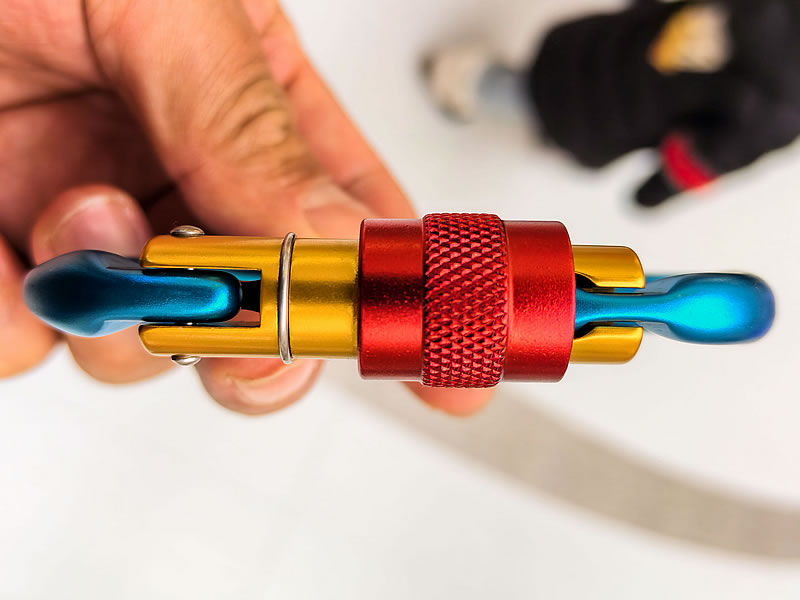
The Physics of a Hidden Weakness
A standard oval or D-shaped carabiner is engineered to withstand immense force when loaded along its long, curved spine. Its typical major-axis strength rating is between 22-24 kN (kilonewtons). However, when loaded across its narrow width—with the gate facing up or down and the force pulling the two sides apart—its strength can plummet to as low as 7-9 kN, a reduction of 60-70%.
This catastrophic weakening happens because the geometry of the cross-loaded position places tremendous bending stress on the metal at the gate opening, the carabiner's most vulnerable point. Instead of the load being distributed safely through the robust spine, it concentrates force on a much smaller, mechanically weaker configuration.
Common Scenarios Where Cross-Loading Occurs
Understanding how cross-loading happens is the first step to prevention. Key danger zones include:
- Sport Climbing Quickdraws: This is the most common scenario. If the rope-side carabiner of a quickdraw twists, a fall can force the carabiner sideways against the rock or the bolt hanger, creating a three-point contact that loads the minor axis.
- Anchor Master Points: Connecting multiple anchor legs into a single, small carabiner can easily create cross-loading if the legs pull from different directions, pinching the carabiner sideways.
- Gate Interaction with Cables or Bolts: A carabiner can become cross-loaded if its gate catches on a chain link, a protruding bolt head, or the wire of a quickdraw, creating a levering action.
- Improper Rigging in Rescue or Rigging: In complex pulley systems or lowering setups, changing load directions can inadvertently sideload a carabiner.
Prevention and Mitigation: Building a Safe Mindset
While cross-loading is a risk, it is largely preventable through careful practice and equipment selection.
- Mindful Orientation: During setup, consciously visualize the direction of pull. Ensure carabiners are aligned so the anticipated force will pull directly along the spine.
- Use the Right Tool for the Job:HMS/Pear-shaped Carabiners: Their larger, rounded profile is ideal for master points in anchor systems, providing more room for multiple connections without inducing cross-loading.Autolocking vs. Screwgate: In high-movement situations where a carabiner might twist, an autolocking model can prevent the gate from accidentally opening if it contacts an object, though it does not prevent the cross-load itself.
- Check Before You Weight: Make a final visual check of all critical carabiners in your system before loading them. Ensure they are hanging cleanly.
- Education and Vigilance: Treat cross-loading as a fundamental risk in every safety briefing. When inspecting used gear, look for unusual wear patterns—symmetrical scratches or grooves on the sides of the carabiner can be a telltale sign of past cross-loading events.
The Bottom Line
Cross-loading transforms a piece of strength-rated equipment into a critical liability without any visible alteration. It undermines the core safety principle of knowing your gear's limits. By cultivating an awareness of load direction, choosing appropriate hardware, and incorporating a cross-load check into your pre-commitment ritual, you actively defend against this silent strength killer. In climbing and beyond, safety resides not just in the gear we use, but in the informed mindfulness with which we use it.




