




Carabiner Corrosion Resistance Ratings: Understanding Materials for Demanding Environments
When selecting carabiners for marine, industrial, or canyonering use, a common question arises: "What is the corrosion resistance rating?" Unlike standardized strength ratings (kN), there is no single, universal numeric scale for corrosion resistance on carabiners. Instead, a carabiner's ability to withstand corrosive environments is determined by its base material, finishing treatments, and design. Understanding these factors is key to choosing the right tool for the job and ensuring long-term safety.
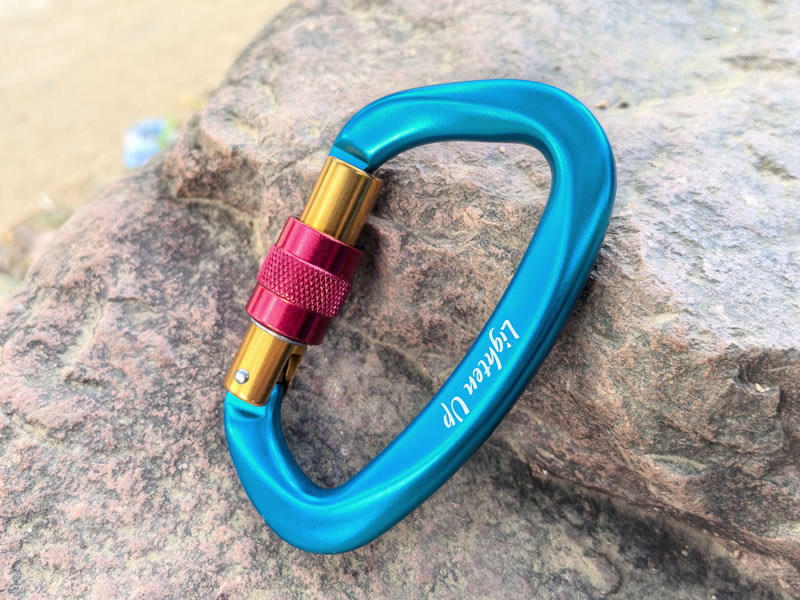
The Core Materials: Aluminum vs. Stainless Steel
The primary determinant of corrosion resistance is the metal itself.
- Aluminum Alloys (e.g., 7075-T6):Inherent Property: Aluminum naturally forms a thin, protective layer of aluminum oxide when exposed to air. This layer is passive and provides good resistance to general atmospheric corrosion.The Weakness: This protection breaks down in highly acidic or alkaline environments. The most significant threat is chloride ions, most commonly from saltwater. Prolonged exposure can lead to pitting corrosion—small, deep holes that severely compromise structural integrity with little surface warning.The Role of Anodizing: Most climbing carabiners are anodized. This electrochemical process thickens the natural oxide layer, creating a harder, more durable, and slightly more corrosion-resistant surface. It also allows for color coding. However, anodizing is a surface treatment; if it is scratched or worn through, the underlying aluminum becomes vulnerable.
- Stainless Steel:The Gold Standard for Corrosion Resistance: Stainless steel carabiners, typically made from grades like 304 or 316, contain chromium, which forms an invisible, self-repairing passive layer. Grade 316 (marine-grade stainless) includes molybdenum, offering exceptional resistance to chlorides.Performance: Stainless steel is the definitive choice for saltwater, chemical exposure, permanent outdoor installations (fixed anchors), or rescue scenarios where gear is frequently exposed to moisture and decontaminants.The Trade-off: The superior corrosion resistance comes with a significant weight penalty—stainless carabiners can be over twice as heavy as their aluminum counterparts.
Beyond Material: Construction and Maintenance
- Galvanic Corrosion: A critical and often overlooked danger occurs when dissimilar metals are in contact in the presence of an electrolyte (e.g., saltwater). For example, an aluminum carabiner connected to a steel bolt or copper accessory can corrode with alarming speed. Isolating metals with plastic or nylon spacers is crucial in mixed-metal systems.
- Crevice Corrosion: Moisture and contaminants can be trapped in tiny gaps, such as under a rubber grip on a wire-gate or between the gate and nose. Regular cleaning in these areas is essential.
- Maintenance as Part of "Rating": A carabiner's real-world corrosion resistance is not just passive; it is active. Regular inspection, rinsing with fresh water after salt or chemical exposure, and thorough drying are non-negotiable maintenance steps that dramatically extend service life, regardless of material.
Choosing the Right Carabiner for Your Environment
- General Rock Climbing & Mountaineering: Anodized aluminum is perfectly suitable and preferred for its light weight.
- Sea Cliff Climbing, Canyoneering, Sailing: Stainless steel is strongly recommended. The constant exposure to saltwater or silt-laden water makes the durability worth the extra weight.
- Industrial/Rope Access & Rescue: Stainless steel is often mandated due to chemical exposure, frequent wash-downs, and the need for maximum durability with less frequent retirement cycles.
- Fixed Anchors (Bolts, Chains): Always stainless steel. Permanence and safety in unpredictable weather demand the highest resistance.
Conclusion: An Informed Choice, Not a Mystery
While you won't find a simple "Class 5" corrosion rating on a carabiner, you can make an expert choice by understanding material science. For most, anodized aluminum offers a great balance. For harsh environments where failure is not an option, investing in stainless steel hardware is a critical safety decision. Ultimately, combining the right material for the environment with a disciplined inspection and cleaning regimen is the true formula for corrosion resistance. Always prioritize manufacturer guidelines for specific chemical exposures, as certain agents can attack even stainless steels.




