




Signs of a Worn-Out Carabiner: Your Essential Inspection Guide
For climbers, arborists, and outdoor professionals, the carabiner is a fundamental and trusted link in any safety system. Unlike food, it doesn't come with an expiration date. Its retirement is based solely on observable wear and damage. Recognizing the critical signs of a worn-out carabiner is not just a maintenance task—it's a core safety skill. Here’s a detailed guide on what to look for during your pre-use inspection.
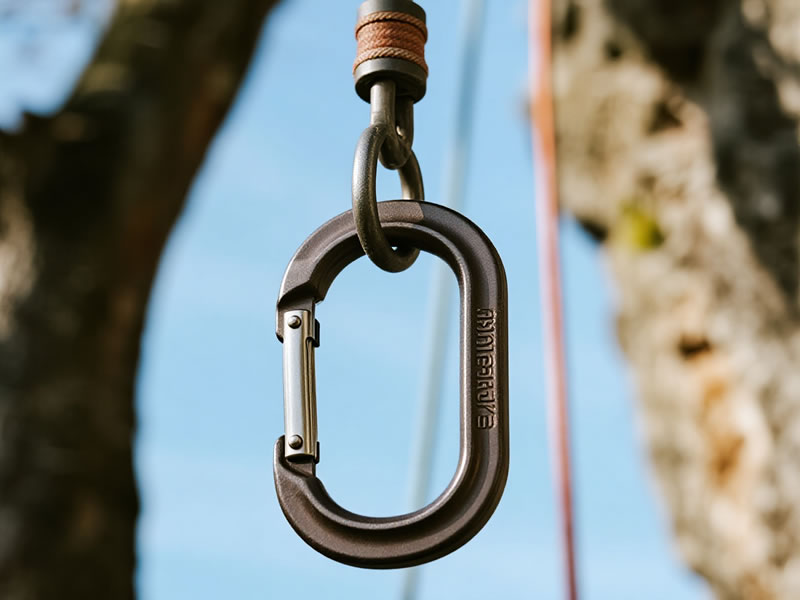
1. The Visual Red Flags: Surface and Structural Damage
Your inspection should begin with a meticulous visual and tactile scan under good light.
- Cracks: Any visible crack, no matter how hairline, is an immediate and absolute retirement signal. Check carefully at high-stress points: the spine, the base of the nose, and the ends of the gate wire.
- Deep Gouges and Grooves: Surface scratches are normal. However, a deep groove, especially on the spine or the rope-bearing side of the gate, is a major concern. If you can catch your fingernail in it, the carabiner is compromised. These grooves act as "stress risers," concentrating force and dramatically reducing breaking strength.
- Pitting Corrosion: For aluminum carabiners, superficial white oxidation is usually harmless. Pitting corrosion—characterized by small, sharp, crater-like holes—is a serious defect that eats away at the material. For steel, any rust, particularly in the hinge mechanism, is a warning sign.
- Sharp Burrs and Metal Deformation: Run your fingers along all edges. Sharp burrs, often caused by impact with rock or metal, can cut ropes or slings. Any bending or misshapen area indicates the metal has yielded under load and should be retired.
2. The Functional Failures: Gate and Mechanism Wear
The moving parts of a carabiner are its most vulnerable components.
- Gate Malfunction: The gate must open smoothly and snap shut decisively with spring-loaded authority. Signs of wear include:Stickiness or Grating: A gritty, rough, or hesitant feel when opening.Weak or Slow Return: A lazy, slow closure indicates a fatigued or damaged spring.Excessive Play ("Gate Wobble"): While some play is normal, significant side-to-side or in-and-out movement of the gate tip signals a worn pivot.
- Locking Mechanism Failure (for Locking Carabiners):Screw Gate: The sleeve must travel the full length of the thread easily and positively, locking fully over the gate nose. Cross-threading or resistance is a failure.Auto-Locking/Twist Lock: The mechanism must consistently engage every time the gate closes. If it requires manual assistance to lock, or if it can be unlocked without the deliberate, correct action, it is unsafe.
3. The Invisible History: When to Retire Based on Events
Some retirement criteria are based on the carabiner's history, not just visible damage.
- Major Impact: Any carabiner that has taken a hard, direct impact—from being dropped onto rocks from height or struck by rockfall—may have internal crystalline damage (metal fatigue) even if it looks fine. Retire it.
- Holding a Severe Fall: While designed for falls, a carabiner that has held an extreme, high-factor fall has been subjected to forces near its limit. Conservative practice dictates retiring it.
- Chemical or Heat Exposure: Unknown chemical contamination or exposure to high heat (e.g., from a wildfire) can alter the metal's properties. When in doubt, retire.
Conclusion: The Mindset of Safety
Inspecting for a worn-out carabiner is a ritual of responsibility. There is no single sign that is more important than another; any of the failures listed above warrants immediate retirement. Develop a consistent, hands-on inspection routine before every use. Remember the fundamental safety principle: "When in doubt, throw it out." The modest cost of a new carabiner is inconsequential compared to the absolute value of the trust you place in it. Your vigilance is the most critical safety feature of all.




