




How to Spot a Counterfeit Climbing Carabiner
In an era of online marketplaces and global supply chains, counterfeit climbing equipment has become a disturbing and dangerous reality. Fake carabiners, often visually convincing, lack the rigorous engineering, material quality, and independent safety certification of genuine products. Using one could lead to catastrophic failure. Protecting yourself requires a vigilant, multi-step inspection process. Here is a comprehensive guide to spotting a counterfeit.
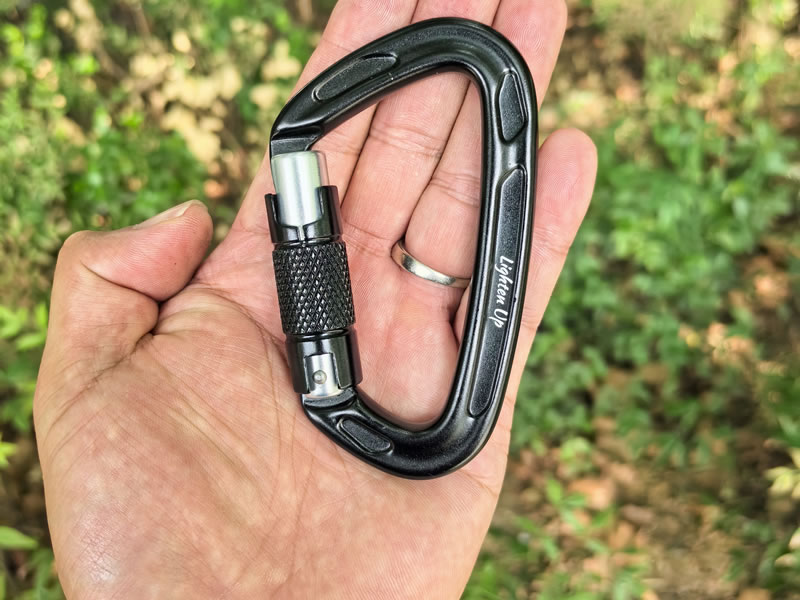
1. The Source: Your First and Strongest Clue
The most reliable way to avoid fakes is to buy from authorized retailers (brand websites, REI, Backcountry, specialty shops). If you’re purchasing from a secondary market or an unknown seller, extreme caution is required. A suspiciously low price is the most glaring red flag. A "Petzl Spirit" sold for $8 is not a deal; it's a danger.
2. Physical Inspection: The Devil is in the Details
A. Markings and Engraving:
- Authentic: Has deep, laser-etched, and precise markings on the spine. This includes the brand logo, model name, strength ratings (e.g., 22 kN), the CE mark, and often the UIAA Safety Label. The font is consistent and professional.
- Counterfeit: Markings are often shallow, stamped, uneven, or use an incorrect font. Logos may be slightly off, letters may be poorly spaced, or the kN rating might be missing or wrong. The CE mark might look crude.
B. Machining and Finish:
- Authentic: Exhibits excellent craftsmanship. Edges are smooth and rounded (deburred). The anodizing is even and durable. The gate pivot is clean with no excessive play.
- Counterfeit: Shows poor machining: sharp burrs, rough spots, uneven or cheap-looking anodizing that chips easily, and visible mold lines. The gate may wobble excessively or feel gritty.
C. Gate Action and Spring:
- Authentic: The gate opens and closes with a smooth, consistent, and springy action. It feels robust and precise.
- Counterfeit: The gate may feel weak, mushy, sticky, or inconsistent. The spring may be under-tensioned, leading to a lazy closure, or over-tensioned and jerky. It may produce a tinny "ping" instead of a solid "snap."
D. Weight:
- Authentic: Has a specific, consistent weight based on its alloy and design.
- Counterfeit: Often feels noticeably lighter due to the use of inferior, lower-density metals (like cheap aluminum or even zinc alloys). If you have a known genuine model, compare them side-by-side.
3. Packaging and Documentation
- Authentic: Comes in high-quality packaging—sturdy clamshells, boxes with precise printing, and includes instruction manuals or safety leaflets in multiple languages.
- Counterfeit: Packaging is often flimsy, made of poor-quality plastic or cardboard. Printing may be blurry, and colors may be off. Spelling and grammatical errors on tags or leaflets are a major giveaway. Manuals may be poor photocopies or missing entirely.
4. The Critical Certification Check
This is non-negotiable. A carabiner for climbing must be certified.
- Authentic: Will be explicitly marked as compliant with CE standard EN 12275 and/or carry the UIAA Safety Label. This is a legal and safety requirement.
- Counterfeit: May have no certification markings, fake logos, or use deceptive language like "Tested to 25 kN" (which is not the same as independent, batch-certified "CE" or "UIAA" approval).
A Step-by-Step Inspection Checklist
When a carabiner is in your hand, run through this list:
- Source: Did it come from a reputable seller?
- Price: Was it far below typical market value?
- Markings: Are the engravings deep, crisp, and correct? Is the CE mark present?
- Feel: Are there any sharp edges? Is the anodizing smooth?
- Gate: Does it open and close smoothly with a positive spring action?
- Weight: Does it feel abnormally light or flimsy?
- Packaging: Is the packaging professional and error-free?
- Compare: If possible, compare it directly to a verified genuine model.
What to Do If You Suspect a Fake
- DO NOT USE IT FOR CLIMBING. Ever.
- Report It: Inform the platform where it was purchased (e.g., Amazon, eBay). Report the seller.
- Alert the Brand: Contact the real brand’s customer service. They actively pursue counterfeiters and want to know about fakes.
- Destroy It: Render it unusable (e.g., with an angle grinder) before disposing of it, so it cannot mistakenly enter the gear pool.
Conclusion: Trust is Earned, Not Given
A climbing carabiner is a life-critical device, not a commodity. Counterfeiters profit by exploiting trust and a desire for a good deal. Your safety depends on developing a critical eye. When in doubt, err on the side of extreme caution and discard the item. The few dollars saved are meaningless compared to the integrity of your safety system. Invest in gear from transparent, authorized supply chains, and inspect every piece meticulously. Your life, and the lives of your partners, depend on it.




