




Carabiner That Holds the Most Weight
The quest for the carabiner that "holds the most weight" is a search for the ultimate margin of safety. However, the answer requires crucial context, as the maximum load capacity is determined by the carabiner's design, materials, and most importantly, its intended world of use—from technical climbing to industrial rigging.
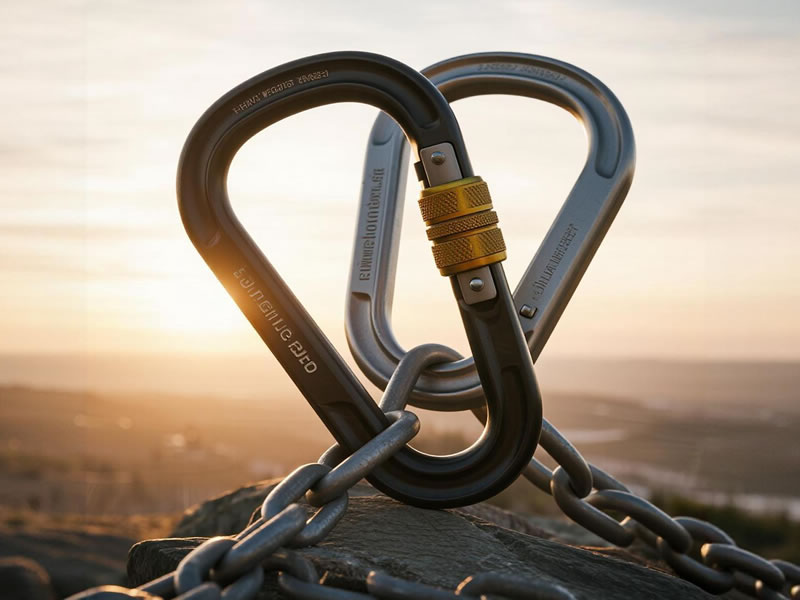
Understanding Strength Ratings: kN vs. Pounds
Carabiner strength is measured in kilonewtons (kN), a unit of force. For perspective, 1 kN is roughly equivalent to 225 pounds of force. However, this measures force under load, not static weight. A climbing fall generates dynamic forces far exceeding a climber's static weight.
The Hierarchy of Strength by Category
1. Certified Climbing & Mountaineering Carabiners (22-25 kN Major Axis)
This is the standard high-strength category for recreational and professional climbing.
- Typical Strength: Virtually all major-brand, non-locking wire or solid gate carabiners are rated between 22-25 kN (~4,950 - 5,600 lbs of force). This is a UIAA/CE requirement and is remarkably consistent.
- The "Strongest" in This Class: Larger locking carabiners, particularly steel models or those with a HMS/pear shape, often hit the top end of this range (e.g., 25-28 kN). Examples include the Petzl William or DMM Sentinel in steel.
- Key Insight: Among climbing carabiners, the difference in ultimate strength is marginal. The choice focuses on gate type, weight, and function, not a search for higher kN, as all certified models exceed the forces encountered in normal climbing.
2. Industrial & Rescue Carabiners (30-50+ kN)
This is where the true heavyweights reside, engineered for scenarios with higher safety factors or massive loads.
- Typical Strength: Carabiners used in technical rescue (NFPA certified), rigging, and Arborist work can have major axis ratings from 30 kN up to 50 kN or more.
- Examples & Characteristics:Large Steel Locking Carabiners: Brands like Rock Exotica, Petzl (Am'D in steel), or Kong make massive, forged steel carabiners with ratings of 40-50 kN. They are heavy and built for connecting ropes to anchors in high-load systems.Screw-Link / Maillon Rapide: While not a traditional spring-gate carabiner, these steel screw links are a cornerstone of high-load rigging. They come in massive sizes with breaking strengths exceeding 100 kN. They are the undisputed champions of pure static load capacity in connective hardware.
3. "Tested" vs. "Certified" – A Critical Distinction
- A product marketed as "tested to 45 kN" may have had a single sample pulled to breaking. It is not the same as a certified rating (UIAA, CE, NFPA), which guarantees every batch meets that minimum strength with a consistent safety margin. Always prioritize certified gear for critical applications.
The Trade-Off: Strength vs. Practicality
The carabiners that hold the most weight come with significant compromises:
- Weight: High-strength steel carabiners are extremely heavy, unsuitable for a climbing rack.
- Size & Bulk: They are large and cumbersome.
- Functionality: They are not designed for the frequent, one-handed clipping action of climbing.
What "Holds the Most Weight" Truly Means for You
Your selection should be dictated by the worst-case scenario force the carabiner must withstand, not just the maximum static weight you plan to hang.
- For Rock/Ice Climbing: Any UIAA/CE carabiner rated at 22 kN or higher is technically strong enough. The forces in a severe fall rarely exceed 8-10 kN on a carabiner due to rope elasticity and system friction. The "strongest" you likely need is a standard 25 kN locker.
- For Highline/Slackline Rigging: This demands a massive safety factor. Here, large steel locking carabiners (40+ kN) or, more appropriately, screw links are used for the primary anchors due to their immense strength and lack of a gate to fail.
- For Industrial Lifting/Rigging: Must follow relevant occupational safety standards. High-load steel carabiners or shackles with certified Working Load Limits (WLL) are mandatory.
The True Champion: The Screw Link (Maillon Rapide)
If the question is purely about the connector that can hold the most weight, the winner is the steel screw link. Available in sizes from small to massive, its seamless, closed-loop design (when screwed shut) eliminates the weak point of a gate. Breaking strengths for large models can exceed 200 kN.
Final Verdict and Safety Imperative
- For climbing and general mountaineering, the Petzl William Steel or similar high-end steel locking carabiners represent the pinnacle of strength within the appropriate tool category.
- For absolute maximum load capacity in rigging or rescue, large, certified steel screw links or industrial carabiners from Rock Exotica or Petzl Professional are the correct choice.
Most importantly: "Holds the most weight" is a less important question than "is appropriately certified and used correctly for its intended purpose." A 22 kN climbing carabiner used properly is infinitely safer than a 50 kN industrial carabiner misused in a climbing system. Never sacrifice the correct application and certification for a higher kN number on paper. Choose the tool designed for your specific world of use, where its strength rating is just one part of a holistic safety engineering package.




