




Carabiners that Work with MOLLE Webbing
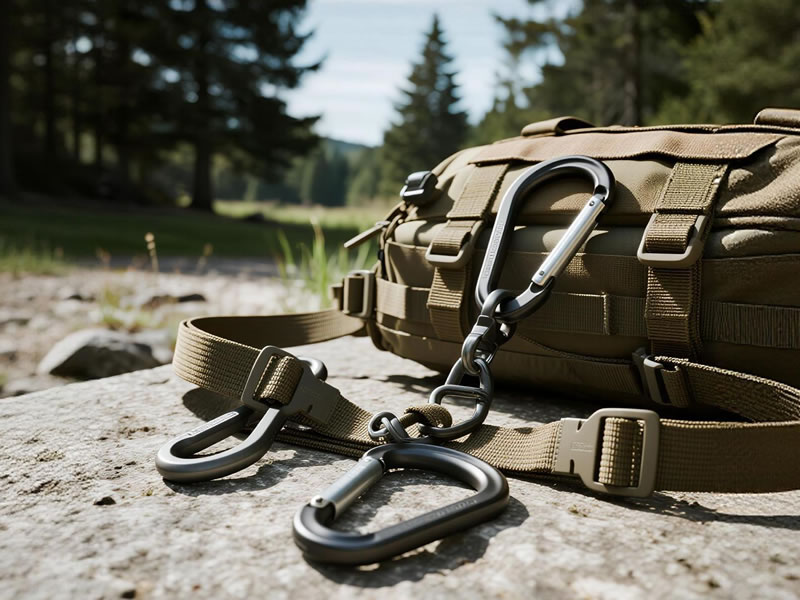
The Modular Lightweight Load-carrying Equipment (MOLLE) system, with its grid of nylon webbing straps (PALS), is the organizational backbone of modern tactical packs, vests, and bags. Integrating carabiners into this ecosystem offers a quick, secure, and modular way to attach gear, but it requires a specific approach. Standard climbing carabiners are often ill-suited. The right carabiner for MOLLE must prioritize a specific form factor, secure attachment method, and low-profile design to function effectively without damaging the system.
The Core Challenge: Integration, Not Just Attachment
The goal is not simply to hook a carabiner onto a MOLLE strap, but to integrate it through the MOLLE grid in a way that is secure, stable, and doesn't interfere with adjacent pouches or straps. The primary challenges are:
- Size and Profile: The carabiner must be narrow enough to pass through the standard 1-inch (25mm) grid spacing.
- Secure Mounting: It should not easily slide laterally or detach accidentally.
- Minimal Snag Hazard: A low-profile design prevents catching on vegetation, vehicle interiors, or other gear.
Key Selection Criteria for MOLLE-Compatible Carabiners
- Shape is Critical:Best: Narrow "D" or "Offset D" shapes. These present a slim profile to the grid and are less likely to rotate or catch.Avoid: Wide, rounded shapes or large ovals that can jam in the grid or protrude excessively.
- Gate Design and Mechanism:Gate Opening: Must be at least 1 inch (25mm) wide to allow the MOLLE strap itself to be fed through the gate, which is the most secure method of attachment.Mechanism: A locking gate (screwgate or auto-lock) is highly recommended for any item you cannot afford to lose. A simple, robust spring gate can suffice for less critical items but adds risk.Nose: A keylock or snag-free nose prevents catching on the webbing during insertion or removal.
- Size and Weight:Small to Medium carabiners are ideal. The goal is to add functionality, not bulk.Lightweight aluminum is common, but stainless steel may be chosen for extreme durability or corrosion resistance in harsh environments.
- Material:Anodized Aluminum: Lightweight, corrosion-resistant, and available in tactical colors (OD Green, Coyote Brown, Black). The most common and practical choice.Stainless Steel: Heavier but impervious to rust and incredibly strong. Ideal for marine or high-abrasion use.
Effective Attachment Techniques
Simply clipping the carabiner's gate onto a strap is insecure. The proper methods are:
- Feed-Through Method: Unclip the gate, thread the MOLLE strap itself through the carabiner's basket, then re-close the gate. This locks the carabiner laterally onto a specific point on the grid. This is the most secure method.
- Loop Attachment: If the carabiner is pre-attached to a gear loop or lanyard, feed that loop/lanyard through the MOLLE grid, then attach it to the carabiner. This creates a secure anchor point.
Recommended Carabiner Types & Examples
- Small Locking Carabiners (The Utility Standard):Examples: Nite Ize S-biner #2 Microlock, small climbing-rated screwgates (like a mini version of the Petzl Spirit).Use: Perfect for attaching gloves, a compass, a multitool, or a flashlight lanyard directly to the webbing via the feed-through method.
- Tactical/Purpose-Built MOLLE Clips:Examples: Products like the Maxpedition Gear Tie, which are essentially heavy-duty, flat-profile carabiners designed specifically for the MOLLE grid.Use: These are often the best-integrated solutions, acting as permanent or semi-permanent attachment points on the pack to which other gear is then clipped.
- The Heroclip (Mini/Small Size):Why it Works: Its genius lies in its fold-out hook. You can use the feed-through method to secure the carabiner base to your pack, and the hook then provides a versatile hanging point for items like water bottles, hats, or even the pack itself.Use: Adds immense hanging versatility to a tactical or hiking pack without modifying the MOLLE system.
What to Avoid
- Large, Bulky Climbing Carabiners: They are overkill, get caught on everything, and strain the MOLLE stitching.
- Non-Locking Carabiners for Critical Gear: In a dynamic environment, a spring gate can be depressed, leading to loss.
- Poorly Made Clips with Sharp Edges: These will quickly fray and damage the nylon MOLLE webbing.
Final Verdict and Strategic Application
The most effective carabiner for MOLLE webbing is a small, narrow-profile, locking aluminum carabiner (like a compact locking S-biner) used with the feed-through attachment method. This provides a secure, low-profile anchor point.
For transforming your pack into a hanging system, the Heroclip is an unparalleled upgrade. For permanent, heavy-duty attachment points, seek out purpose-built tactical MOLLE clips.
Remember, these applications are for gear organization and load carriage only. MOLLE-attached carabiners are not substitutes for climbing protection or life-support systems. By selecting the right form factor and using proper attachment techniques, you can leverage the MOLLE system's modularity to its fullest, creating a highly personalized and efficient carry platform where every tool has a secure and accessible home.




