




Ultra-light Carabiners for Fast-and-Light Alpinism
In the world of fast-and-light alpinism, every gram is a negotiation between safety, functionality, and speed. The philosophy demands not just fitness and skill, but an obsessive optimization of gear. Here, carabiners are not mere connectors; they are a primary target for weight savings. Choosing the right ultra-light carabiners is a critical exercise in reducing systemic weight without crossing the thin line into unacceptable risk.
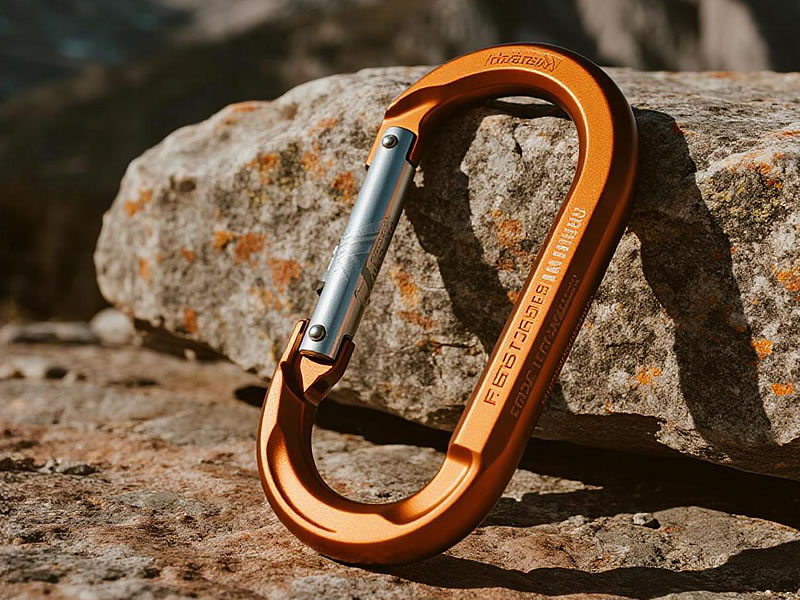
The Fast-and-Light Ethos: Why Grams Matter
The goal is to move swiftly through complex, high-mountain terrain, often over multiple days, with a minimal pack. Reducing weight directly translates to:
- Increased Speed and Endurance: Less energy expended per vertical meter.
- Lower Objective Hazard: Faster transit reduces exposure to avalanches, rockfall, and deteriorating weather.
- Enhanced Margin for Error: A lighter pack allows for greater agility and quicker decision-making.
A standard climbing rack might carry 15-20 carabiners. Swapping each standard carabiner (45-50g) for an ultra-light model (22-28g) can save over 300 grams—a significant fraction of your total pack weight.
Defining the Ultra-Light Carabiner
For alpinism, "ultra-light" refers to carabiners that achieve maximum strength with minimal material, typically weighing between 20 and 30 grams. They are characterized by:
- Advanced Materials: Use of high-grade, hot-forged aluminum alloys (7075-T6) or, in rare cases, titanium.
- Skeletal Engineering: Precisely calculated shapes that remove all non-essential material while maintaining structural integrity.
- Wire-Gate Dominance: Wire gates are universally lighter and less prone to freezing than solid gates.
Critical Selection Criteria for Alpine Use
- Strength-to-Weight Ratio: The paramount metric. Must be UIAA/CE certified (typically 20-23 kN major axis). This certification is non-negotiable; it's your guarantee that weight savings haven't compromised core strength.
- Cold Weather Reliability: Wire gates are preferred as they have fewer internal channels for moisture to enter and freeze. The gate spring must remain functional in sub-zero temperatures.
- Snag-Free Design: A keylock or hooded nose is essential. It prevents catching on clothing, slings, or rope when hands are numb and efficiency is critical.
- Ergonomics for Gloved Hands: The gate must be easy to open with bulky gloves. A large, accessible gate lever is a subtle but vital feature.
Top Contenders: The Weight-Weenie's Pantheon
- Petzl Ange S & L: The current benchmark. The Ange S (straight) and Ange L (bent) wire gates weigh ~22g and ~24g respectively. They utilize Petzl's Sm’D wire technology for strength and a flawless keylock system. Their minimalistic design epitomizes the fast-and-light ideal.
- Camp Photron 22 / Nano 22 Wire: A fiercely competitive option, often weighing 23-25g. Renowned for its buttery-smooth action, excellent keylock nose, and often a slightly more affordable price point than Petzl.
- Black Diamond Ultralight Wiregate: BD's direct answer, offering a slightly different gate feel and the potential benefit of their HoodWire technology on some models to reduce snagging.
- DMM Phantom & Alpha Lite: DMM's offerings focus on a superb blend of light weight and durable craftsmanship. The Phantom is incredibly light, while the Alpha Lite offers a bit more bulk for added psychological durability.
The Locking Carabiner Conundrum
Locking carabiners are necessary for belays, rappels, and critical anchors but are inherently heavier. The strategy is to carry the absolute minimum (1-2).
- Ultra-Light Locking Option: The Petzl Am'D Light or a small DMM Revolver Lock provides locking security with a minimal weight penalty.
- Philosophy: Often, a single ultra-light locker is used for the belay device, while non-locking carabiners, used in pairs with opposed gates, create "lockers" for anchors—a technique that saves substantial weight but requires impeccable discipline.
The Fast-and-Light Racking Philosophy
This is where gear selection meets mental discipline. Your rack is not a collection of possibilities, but a curated set of certainties.
- Minimize Quantity: Carry only the number you are certain to need for the planned route and a small margin for error. 8-12 carabiners is a typical range for a major alpine objective.
- Dedicated Functions: Assign carabiners specific roles (e.g., these four for the rack, these two for the anchor cord, this one for the belay device).
- Hybrid Racks: Many alpinists carry a mix: 6-8 ultra-lights for general use and 2-4 slightly more durable "workhorse" carabiners for high-abrasion points.
Safety and Practical Warnings
- Increased Wear: Ultra-light carabiners have thinner anodizing and material. They can show wear from rock contact more quickly. Inspect them meticulously.
- Psychological Factor: Their slender profile can feel less substantial. Trust the certification, not the feel.
- Not for Heavy Rigging or Aid: These are for climbing and anchoring. For hauling or complex rescue rigging, standard or steel carabiners are required.
- Test in Conditions: Before relying on them for a major objective, use them on lesser climbs in cold conditions to ensure you can operate them reliably with gloves.
Conclusion: The Calculated Gram
Selecting ultra-light carabiners for fast-and-light alpinism is the ultimate expression of gear minimalism. It requires forsaking the comfort of bulk and redundancy in favor of intelligent, certified efficiency. Models like the Petzl Ange and Camp Photron represent the pinnacle of this engineering, offering life-support strength in a package that barely registers on a harness.
Ultimately, this choice is a commitment to a philosophy. It acknowledges that in the high mountains, speed is safety, and that safety is built not on excess, but on the precise, reliable performance of every single component in a radically simplified system. By carefully selecting and strategically deploying these exquisite tools, the alpinist sheds weight not as a compromise, but as a deliberate strategy to move faster, climb higher, and return safely.




