




Can I Use a Climbing Carabiner for Towing a Car? Understanding the Lethal Difference Between kN and Tons
The short and critical answer is an emphatic no. Using a climbing carabiner for vehicle recovery or towing is profoundly dangerous and can lead to catastrophic equipment failure, severe injury, or death. While both applications involve connecting objects under load, the forces, materials, and safety standards are worlds apart. This article explains the fundamental incompatibilities and underscores why using life-support climbing gear in an automotive context is a fatal misconception.
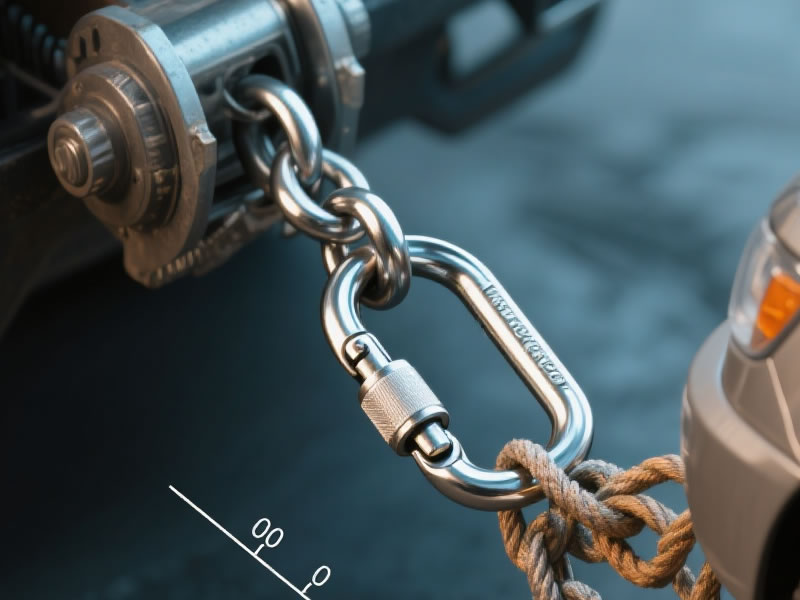
The Core Misconception: Confusing Strength with Suitability
A common thought process is: "My climbing carabiner is rated for 22 kN (about 4,944 pounds), so it should hold a car." This logic is fatally flawed. It mistakes a static strength rating in a controlled direction for a dynamic, multi-directional, and shock-loaded real-world scenario. Towing and recovery generate forces that a climbing carabiner is neither designed nor certified to withstand.
Why a Climbing Carabiner is a Deadly Choice for Towing
1. The Physics of Force: Dynamic Shock Load vs. Static Test
- Climbing Context: A climbing carabiner's kN rating is tested under a slow, controlled, straight-line pull (major axis) in a laboratory. In a fall, forces are high but brief and largely along a single, predictable axis.
- Towing Context: Vehicle recovery involves dynamic shock loading. When a tow strap stretches and jerks, it can multiply the force by 2-3 times the vehicle's weight. A stuck 4,000 lb SUV can instantly generate over 8,000 lbs of force. More critically, these forces are rarely in a straight line. Side loads (pulling from an angle) are common and can reduce a carabiner's effective strength by over 60%.
2. Material and Design Incompatibility
- Material: Climbing carabiners are made from lightweight, high-strength aluminum alloys (e.g., 7075-T6) to save weight on a harness. These alloys can be brittle under sudden, massive impact and are susceptible to wear from abrasion against mud, sand, and metal.
- Gate Mechanism: The aluminum gate is the weakest point. A sideways jerk or the vibration of a tow strap can cause gate flutter or lash, potentially leading to inadvertent opening. Even a screw-gate locker is not designed for the rotational vibrations of towing.
- Shape and Wear: The narrow, rounded shape of a climbing carabiner is a poor match for wide, flat tow straps or ropes, creating a high-stress concentration point that can damage the strap and weaken the 'biner.
3. The Absence of a Safety Factor for This Use
Climbing gear has a significant safety factor, but it's calculated for climbing falls. Automotive recovery gear operates under a different, often more demanding, safety paradigm. A properly rated bow shackle (e.g., "3/4-inch, Grade 70") has a Working Load Limit (WLL) of 6.5 tons and is made of forged or alloy steel designed to bend and deform (providing warning) rather than shatter like aluminum.
The Catastrophic Risks of Failure
When a climbing carabiner fails under towing stress, it doesn't just bend. The aluminum can shatter or snap violently, turning the carabiner and attached hardware into lethal, high-velocity projectiles. This phenomenon, known as a "snapback," has caused serious injuries and fatalities. The broken pieces can travel faster than a bullet, capable of penetrating windshields and metal.
What to Use Instead: Proper Vehicle Recovery Gear
Safe recovery requires equipment engineered for the task:
- Rated Bow Shackles: Use forged alloy steel shackles with a clearly marked Working Load Limit (WLL) that exceeds your vehicle's weight and accounts for shock loads. Look for a safety factor compliance (e.g., ASME B30.26).
- Soft Shackles: Modern, high-strength synthetic shackles made from Dyneema® are excellent, lightweight alternatives for many recoveries. They are safer as they store less kinetic energy if they fail.
- Proper Attachment Points: Only connect to dedicated recovery points (tow hooks, D-rings) on the vehicle's frame—never to suspension components, ball hitches, or standard trailer hitches.
- A Rated Tow Strap or Kinetic Rope: Use a strap without metal hooks, designed specifically for recovery with a stated breaking strength.
Conclusion: A Matter of Engineered Purpose
Climbing carabiners and vehicle recovery shackles are both heroes in their respective domains, but crossing these domains is a recipe for disaster. It is a fundamental error of judging equipment by its appearance rather than its engineered purpose and certification.
Your climbing gear is designed to save your life on the rock. Your recovery gear is designed to save your vehicle in the mud. They are not interchangeable. Respecting the profound difference between a kilonewton-rated life-support system and a ton-rated industrial recovery system is not just technical—it's a non-negotiable tenet of safety.
When recovering a vehicle, leave the climbing rack in your pack. Reach for the properly rated bow shackle instead. Your life, and the lives of those around you, depend on using the right tool for the job.




