




"Non-Climbing" Carabiner - What Does It Mean? A Guide to Safety and Appropriate Use
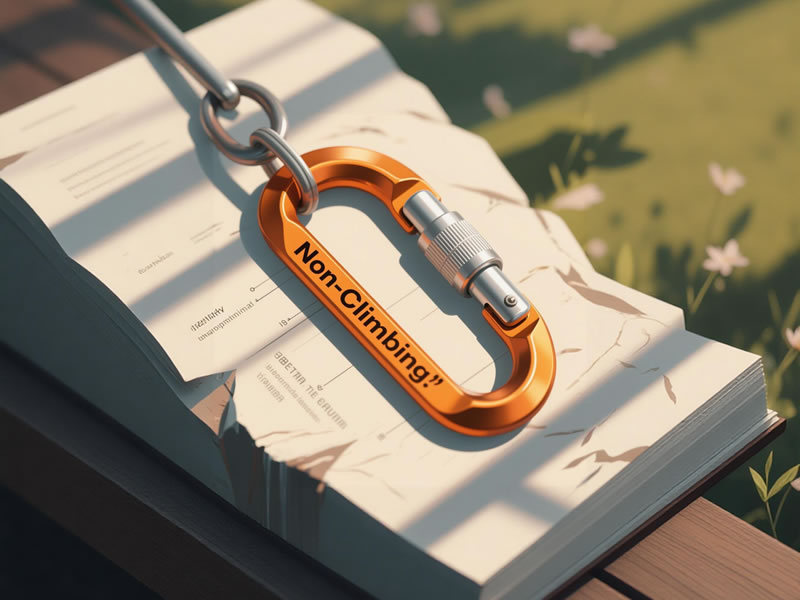
The term "non-climbing carabiner" is more than a simple descriptor—it is a critical safety classification. At its core, it refers to any carabiner not manufactured, tested, or certified for life-support applications such as climbing, mountaineering, rope access, or industrial fall protection. Understanding this distinction is essential for anyone from outdoor enthusiasts to DIY hobbyists, as misapplication can have severe consequences.
The Defining Line: Certification and Intent
The primary difference lies in certification and intent of use.
- A climbing carabiner is classified as Personal Protective Equipment (PPE). It must pass rigorous, standardized tests governed by organizations like the UIAA (International Climbing and Mountaineering Federation) and the CE (with the specific EN 12275 standard). These tests verify its Minimum Breaking Strength (MBS)—typically 20 kN (approx. 4,500 lbs) or more—under various load conditions (gate open, cross-loaded).
- A "non-climbing" carabiner has no such life-support certification. It is designed and sold as a general-purpose utility item. Its strength is unknown and untested for dynamic shock loads, and it carries no guarantee that it will not fail under your body weight in a fall.
Key Characteristics of Non-Climbing Carabiners
- Absence of Critical Markings: You will not find a stamped kN rating or a UIAA/CE certification mark on a non-climbing carabiner. Look for this first.
- Material and Construction: They are often made from cheaper, weaker materials like zinc alloy, low-grade aluminum, or even plastic. While they may feel sturdy, their gates and spines are not engineered for high-impact forces.
- Gate Mechanisms: Many feature simple, non-locking gate designs. Even those with a screw-lock sleeve are not safety-rated; the locking mechanism is for convenience, not to prevent gate failure under load.
- Marketing and Packaging: They are sold in multipacks at hardware, big-box, or promotional gift stores. Descriptors like "decorative," "keychain," "utility," or "tool" are common, while "climbing," "mountaineering," or "safety" are absent.
Common and Appropriate Uses for Non-Climbing Carabiners
These carabiners excel at light-duty organizational tasks where failure is an inconvenience, not a catastrophe:
- Gear Organization: Clipping water bottles, travel mugs, or dry bags to the exterior of a backpack.
- Everyday Carry (EDC): Managing keys, attaching a small flashlight or multi-tool to a bag's daisy chain.
- DIY and Home Use: Hanging plants, organizing tools in a workshop, or creating adjustable ties for tarps.
- Pet Accessories: Attaching ID tags or poop bag holders to a leash (never as the primary leash clip).
The Grave Risks of Misuse: Why the Distinction Matters
Using a non-climbing carabiner in a life-support context is an extreme hazard due to:
- Unpredictable Failure: Under the dynamic, multi-directional force of a fall, the gate can snap, bend open, or the spine can fracture. Failure can occur at a fraction of a climber's static weight.
- No Safety Standards: There is no regulated safety factor. A manufacturer's vague "tested to 50 lbs" claim has no relation to the physics of a climbing fall.
- The Illusion of Security: Their familiar shape creates a false sense of safety, making this one of the most dangerous and common errors novice adventurers make.
How to Identify a True Climbing Carabiner
Always perform this visual checklist before trusting your life to a carabiner:
- Find the kN Rating: Look for a number like "22 kN," "24 kN," or "≥ 20 kN" stamped on the spine.
- Look for Certification Marks: The UIAA seal or a CE mark with the number "EN 12275" are definitive indicators.
- Purchase Source: Buy from reputable outdoor specialty retailers or known climbing brands (e.g., Petzl, Black Diamond, Mammut, DMM, Camp).
Conclusion: A Matter of Engineered Purpose
A "non-climbing" carabiner is a useful tool in its proper context—the realm of convenience and organization. Calling it "non-climbing" is not a judgment of poor quality, but a vital specification of its engineered purpose.
Respecting this boundary is fundamental to risk management. When the stakes involve gravity and human life, there is no room for substitution or assumption. Your climbing rack must consist of certified, life-support gear. For everything else, the humble, inexpensive utility carabiner is a perfectly capable solution.
The rule is simple: If a failure of the connection could result in injury or death, you must use certified climbing gear. For all other tasks, a "non-climbing" carabiner will serve you well. Always choose the right tool for the job, and know the critical difference between a convenience item and life-saving equipment.




