




Why Are Some Carabiners So Much Cheaper? Decoding the True Cost of Safety and Convenience
The price disparity between a $2 hardware store carabiner and a $15+ climbing carabiner can be confusing. While they may appear similar, the difference in cost reflects a profound divergence in materials, engineering, manufacturing standards, and intended life-or-death purpose. Understanding these factors is crucial for making safe and informed purchases, whether you're gearing up for a climb or organizing your keys.
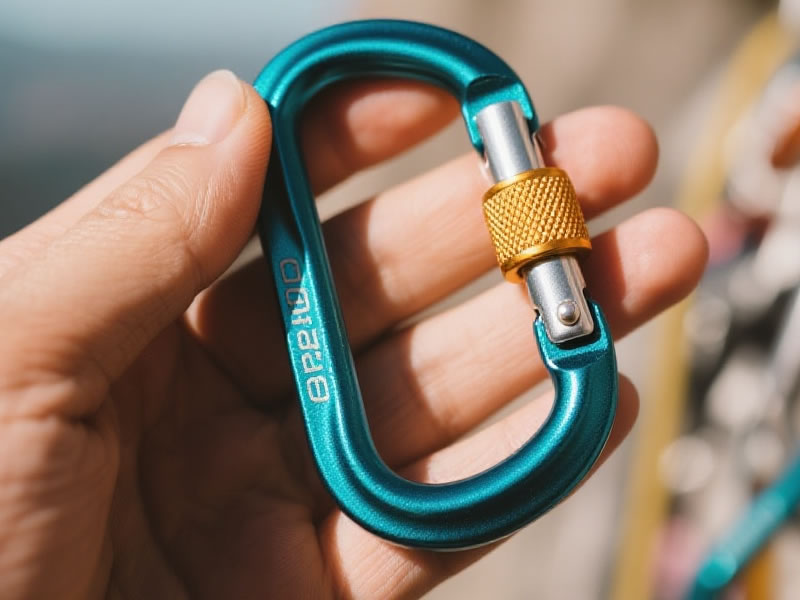
1. The Premium of Life-Support Certification: Testing and Standards
This is the single most significant cost driver. A certified climbing carabiner is legally classified as Personal Protective Equipment (PPE).
- Rigorous, Destructive Testing: Manufacturers must batch-test carabiners to destruction to meet stringent UIAA (International Climbing and Mountaineering Federation) and CE (EN 12275) standards. These tests verify the Minimum Breaking Strength (MBS) not just in a straight pull, but in its weakest configurations: with the gate open, and cross-loaded sideways. Failed batches must be discarded.
- Liability and Quality Assurance: This certification process is expensive and requires meticulous quality control at every production stage. The cost insures against the astronomical liability of a gear failure. A non-climbing carabiner undergoes no such standardized, third-party safety testing. Its strength is a vague estimate, not a certified guarantee.
2. Aerospace-Grade Materials vs. Common Alloys
- Climbing Carabiners: Use high-strength, heat-treated aluminum alloys (like 7075-T6) or specialty steel. These materials offer an exceptional strength-to-weight ratio and are engineered to withstand high-impact forces without becoming brittle.
- Budget Carabiners: Are typically made from zinc alloy (Zamak), lower-grade aluminum, or coated steel. Zinc alloy is much cheaper and easier to cast into shapes, but it is significantly heavier and more brittle. It can crack or shatter under sudden shock loads, which is unacceptable for climbing.
3. Precision Engineering and Manufacturing
- Forging vs. Casting: Most quality climbing carabiners are forged. This process compresses the metal grain structure, creating a stronger, more uniform part. Many cheap carabiners are die-cast, where molten metal is poured into a mold. Casting can introduce microscopic weaknesses and porosity, making the part unreliable for high-stress applications.
- Gate Mechanism Complexity: A climbing carabiner's spring-loaded, self-locking gate mechanism is a small feat of precision engineering. It must operate flawlessly thousands of times, in mud and freezing cold. The cost reflects this precision. Cheap carabiners often have simple, non-locking gates with basic springs that can fail or deform easily.
4. Research, Development, and Design Overhead
Leading climbing brands invest heavily in R&D to innovate stronger, lighter, and safer designs (e.g., keylock nose technology to prevent snagging, optimized gate geometries). They also pour resources into professional athlete testing and real-world feedback loops. This investment is reflected in the price. Generic utility carabiners are simple, copied designs with no development cost.
5. Volume and Market
Budget utility carabiners are produced in colossal volumes for a mass market (promotional items, keychains, general hardware). This scale drives the per-unit cost down. The market for certified climbing carabiners, while substantial, is niche by comparison, with higher costs spread across fewer units.
The Risk of the Bargain: A False Economy
Choosing a cheap carabiner for the wrong task is a dangerous false economy:
- For Climbing/Rigging/Work at Height: The risk is catastrophic failure, leading to severe injury or death. The "savings" are irrelevant.
- For Gear Organization: A cheap carabiner might bend open, losing your water bottle or keys. The higher cost of a reputable brand like Nite Ize for utility use often pays for itself in durability and reliable performance over years.
Making an Informed Choice: It's About Application
The key is to match the tool to the task:
- For Life-Support (Climbing, Belaying, Rope Access, Fall Arrest): You must invest in a certified, name-brand climbing carabiner. Look for the kN rating and UIAA/CE mark. This is non-negotiable.
- For Critical but Non-Life-Support Tasks (Heavy Gear Hauling, Animal Tethers): Choose a rated industrial carabiner or screw-lock quick link with a stated Working Load Limit (WLL) from a reputable hardware brand.
- For Light-Duty Utility (Keys, Water Bottles, Backpack Loops): A cheaper, non-climbing carabiner is perfectly acceptable. Brands like Nite Ize offer a good balance of cost and reliable quality for this tier.
Conclusion: Price Reflects Purpose
The dramatic price difference between carabiners isn't arbitrary; it's a direct reflection of engineering integrity, material science, and the cost of ensuring human life is protected. A cheap carabiner is an excellent organizational tool. An expensive climbing carabiner is a vital piece of safety equipment.
When your safety, or the safety of others, depends on the connection, the choice is clear. Invest in certified, purpose-built gear. For the rest, let convenience and budget guide you—but always with a clear understanding of what that low price truly represents: a tool designed for convenience, not consequence.




