




Can a Screwgate Carabiner Unscrew Itself? Understanding and Mitigating the Risk
In the critical safety chain of climbing and rope systems, the locking carabiner is a fundamental link. Among these, the manual screwgate is a classic and trusted design. A question that naturally arises for both novices and experienced users is: Can a screwgate carabiner unscrew itself during use? The answer is not a simple yes or no, but a nuanced explanation of risk, physics, and proper protocol. While a correctly used screwgate is highly secure, under specific conditions, it can indeed begin to loosen, making user vigilance and technique paramount.
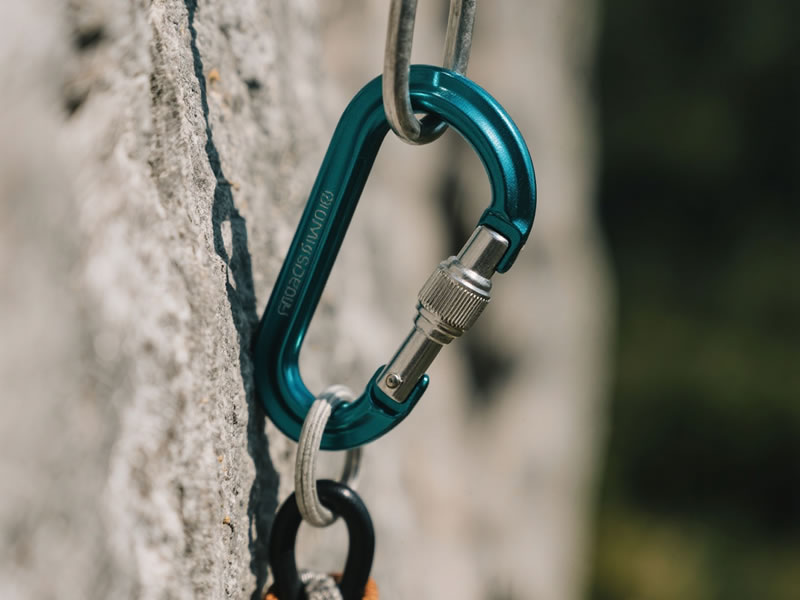
The Mechanics: How a Screwgate Works
A screwgate carabiner features a threaded barrel (sleeve) that rotates over the gate’s threaded end. When fully screwed down, the sleeve physically blocks the gate from opening. Its security relies entirely on the user manually applying and maintaining sufficient torque on the sleeve.
Forces That Can Lead to Unscrewing
Under ideal, static conditions, a fully tightened screwgate will not spontaneously unwind. However, real-world environments introduce dynamic forces that can induce rotation:
- Vibration and "Walking": This is the most common cause. Repeated, sustained vibration—from wind on a suspended rope, machinery, or even a long drive with gear in a truck—can cause the sleeve to incrementally "walk" loose. The constant micro-movements act like a very slow, unintended unscrewing motion.
- Contact and Abrasion: A carabiner rubbing against rock, fabric, another piece of metal, or even being pulled through a climbing system can have its sleeve snagged and rotated. A cross-loaded carabiner pressing against a surface is particularly susceptible, as friction against the sleeve can directly turn it.
- Insufficient Initial Tightening: The most user-dependent factor. A sleeve screwed down only finger-tight lacks the necessary friction and thread engagement to resist the forces above. It becomes vulnerable to incidental contact.
The Critical Importance of Technique and Habit
Because the risk exists, the climbing community and safety standards have developed non-negotiable protocols to manage it:
- The "Screw Down, Back Off" Method: Best practice is to screw the sleeve down fully until it is snug, then back it off a quarter-turn. This prevents the threads from binding under load, which could make it impossible to unscrew later. More importantly, a bound thread is not necessarily a safer one; the quarter-turn back ensures the sleeve is in its optimal position to resist rotational forces without being over-tightened.
- The "Lock, Load, Check" Habit: This should be an automatic mental checklist:LOCK the gate after clipping.Apply LOAD to the carabiner (a firm tug).CHECK the sleeve visually and by touch to ensure it remains fully locked. This check must be repeated by all climbers at regular intervals throughout the activity.
Screwgate vs. Auto-Locking Carabiners
This inherent risk profile is why auto-locking carabiners (e.g., Petzl’s Ball-Lock, Mammut’s Twister, or magnetic designs) were developed. These devices feature a spring-loaded mechanism that automatically engages the lock when the gate closes. They require two distinct, deliberate actions to open (e.g., pull and twist), making them fundamentally resistant to accidental unscrewing. For critical, long-term, or high-vibration applications—such as fixed anchors, top-rope setups, or rescue scenarios—many professionals prefer auto-locking designs.
Conclusion: Vigilance is the True Lock
So, can a screwgate carabiner unscrew itself? It will not magically spin open on its own, but it can be loosened by environmental forces and user error. Its reliability is a direct partnership between the equipment's design and the user's disciplined practice.
Therefore, the screwgate carabiner remains a perfectly safe and viable choice provided the user respects its design:
- Always employ proper locking technique.
- Cultivate the habit of constant visual and physical inspection.
- Understand that in high-risk or high-friction environments, an auto-locking carabiner may be the more prudent choice.
In climbing and safety work, there is no such thing as "set and forget." The screwgate’s simplicity is its strength, but it demands your active attention. Your conscious vigilance is the final, and most important, component that keeps the system securely locked.




