




How to Choose a Carabiner for a Specific kN Rating: A Guide to Safety and Application
In the world of carabiners, the term "kN" or kilonewton is the definitive measure of strength and the most critical specification for ensuring safety. Choosing a carabiner based on a specific kN rating is not about picking the highest number available; it’s about understanding the force requirements of your activity and selecting certified, appropriate equipment. Whether for climbing, industrial safety, or heavy-duty gear management, grasping the meaning of the kN rating is essential for making an informed and safe choice.
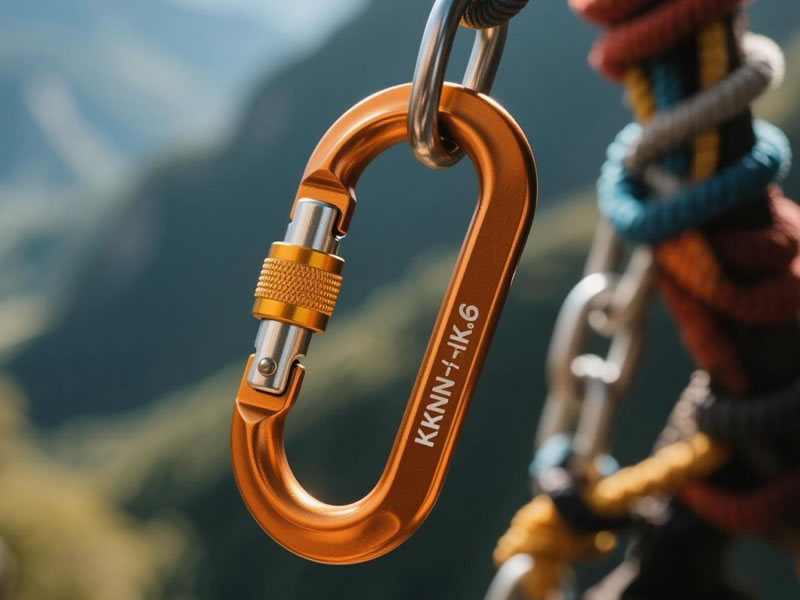
Understanding the kN Rating
A kilonewton is a unit of force equal to approximately 225 pounds. When stamped on a carabiner (e.g., 22 kN, 10 kN), this rating refers to its major axis strength—the force it can withstand when loaded along its spine with the gate closed. It is a measure of ultimate breaking strength under controlled, slow-pull conditions. It is crucial to note that this is not a safe working load but a minimum breaking strength. Industry standards for life-safety applications build in a significant safety margin, but the rating itself is a benchmark of the hardware's integrity.
Breaking Down the Three Axes of Strength
A quality carabiner will have three ratings stamped on it:
- Major Axis Strength (e.g., 22 kN): This is the most important rating for most uses. It represents the force needed to break the carabiner when pulled straight apart along its long, solid side.
- Minor Axis Strength (e.g., 7-8 kN): This is the strength when force is applied across the gate (sideways or cross-loaded). This rating is significantly lower and highlights why preventing cross-loading in use is vital.
- Open Gate Strength (e.g., 7-9 kN): This is the strength when the gate is open and force is applied on the major axis. This dramatic reduction underscores the critical importance of ensuring the gate is properly closed and locked during use.
Matching kN Rating to Your Application
Your choice should be dictated by the potential forces involved and the relevant safety standards for your activity.
- For Rock Climbing, Mountaineering, and Fall Arrest (Life-Safety Critical):Standard Requirement: You must use carabiners certified to relevant standards (UIAA, EN, or CE). For standard locking and non-locking carabiners, the minimum breaking strength on the major axis is 20 kN to 25 kN.Reasoning: These ratings are designed to withstand the immense dynamic forces generated in a climbing fall, which can far exceed a person's static body weight. Never use a non-certified carabiner for life-safety purposes.
- For Industrial Work-at-Height and Rescue (Professional Use):Standard Requirement: Follow strict occupational safety regulations (like OSHA guidelines). Equipment is often rated similarly to climbing gear (22+ kN) but is selected as part of a comprehensive, certified system. Only use equipment specified by your safety plan and regulator.
- For Gear Organization, Tactical Use, or Heavy Bags (Non-Life-Safety):Guideline: kN ratings are still important for durability. A carabiner rated between 5 kN and 12 kN is typically more than sufficient for securing heavy duffels, tool belts, or equipment to packs.Selection Tip: For heavy, static loads (like a tool bag), prioritize a robust design (like a forged steel screw-lock) with a rating that well exceeds the expected weight. A 10 kN carabiner, for instance, can theoretically hold over 2,200 lbs in a perfect, static pull test, providing a massive safety factor for everyday gear.
The Non-Negotiables in Your Selection Process
- Prioritize Certification: For any activity where a fall could occur, the presence of a UIAA, CE, or EN certification mark is more important than a raw kN number. This ensures the carabiner has passed a suite of standardized safety tests.
- Understand the System: A carabiner is only as strong as the weakest link in your system. Its high kN rating is irrelevant if attached to a weak stitch or a non-rated strap.
- Trust Reputable Brands: Purchase from established manufacturers specializing in your field of use (e.g., Petzl, Black Diamond for climbing; DMM, Camp for technical use). Avoid uncertified, no-name hardware for any critical application.
- Respect the Limits: The kN rating assumes a perfectly maintained carabiner. Wear, corrosion, gate damage, and cross-loading all drastically reduce real-world strength.
In conclusion, choosing a carabiner for a specific kN rating is a two-step process: first, identifying the minimum required strength for your activity based on established safety standards, and second, selecting a certified, well-made product from a trusted source. By decoding the numbers stamped on its spine and respecting their meaning, you transform a simple piece of metal into a reliable tool, ensuring security whether you’re hanging from a cliff, working at height, or simply securing your most valuable gear.




