




How Many Carabiners Do I Need for a Gear Sling? A Guide to Modular Efficiency
The gear sling has become an indispensable piece of kit for photographers, outdoor enthusiasts, tactical professionals, and makers alike. It offers a convenient, chest-level platform to keep essential tools accessible without the bulk of a full vest. However, its true potential is unlocked not by the sling itself, but by its connective tissue: carabiners. The question of how many carabiners you need for a gear sling isn't about a single number, but about understanding a modular philosophy. The optimal setup typically involves 2 to 4 carabiners, each serving a distinct, strategic role in creating a secure, organized, and rapidly deployable system.
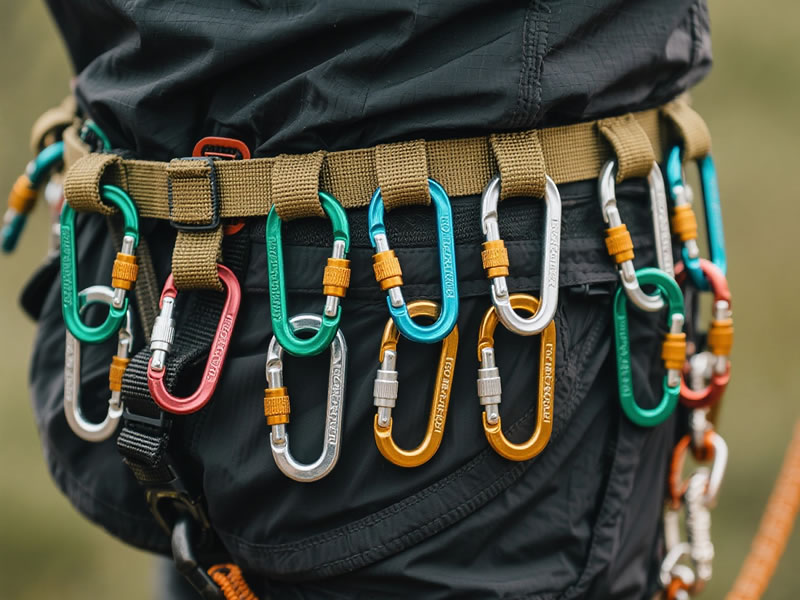
The foundation of this system is the Primary Attachment Carabiner. You need one of these, and it is the most critical component for safety. This carabiner is responsible for connecting the main loop of your gear sling to your body or pack. It must be utterly dependable. Therefore, it should be a robust, locking carabiner—ideally with a screw-lock, twist-lock, or auto-locking gate. Its strength rating should be substantial (e.g., 18 kN or higher is a good benchmark), as it bears the entire weight of your loaded sling. This single point of failure demands the highest security to prevent catastrophic detachment.
Beyond this anchor, the magic of modularity begins with Secondary Utility Carabiners. This is where you will likely use 1 to 3 additional carabiners, and their type can vary based on your gear.
- The Organizer: Attach one medium-sized, smooth-gate or lightweight locking carabiner directly to the sling's webbing. This becomes a primary hanging point for your most frequently accessed or heaviest item, such as a water bottle, a compact pair of binoculars, or a lens pouch. Using a carabiner here instead of a built-in strap allows for swift removal and reattachment.
- The Specialists: Additional carabiners serve specific duty. A small, low-profile snap gate carabiner is perfect for clipping lightweight items like a glove, a buff, or a pack of hand wipes—things you grab often and don't want to fumble with. For securing a camera to the sling's strap via its tripod mount, a dedicated screw-lock carabiner provides essential vibration-proof security. The key is to use different styles or colors to mentally map your gear by touch.
The exact number within this 2-4 range depends on your Personal Use Case:
- The Minimalist (2 carabiners): One locking primary anchor + one utility carabiner for a core item (e.g., water bottle). Ideal for light hikes or as a minimalist camera strap.
- The Tactical/Photographer (3-4 carabiners): One locking primary anchor + two or three specialized carabiners. This allows for compartmentalization: one for a multi-tool, one for a camera, and one for a secondary pouch. This prevents heavy items from banging together.
- The Maker/Technician (4+ carabiners): May employ multiple small carabiners to dangle specific, often-used tools (torx keys, scribe, flashlight) for supreme workflow efficiency, while still relying on one heavy-duty primary anchor.
Beyond count, principles matter. Avoid overloading; too many items will tangle and become cumbersome. Prioritize security for expensive gear with locking gates. Use carabiners with keylock noses (no protruding gate hook) to prevent snagging on the sling's webbing or other equipment.
In conclusion, asking how many carabiners you need is the right first step in building an intelligent system. Start with the non-negotiable one secure locking carabiner as your anchor. Then, assess your gear: how many discrete, frequently used items deserve their own quick-release point? For most, adding 1 to 3 more carabiners will create a perfect balance of security, organization, and accessibility. The goal is not to cover your sling in metal, but to thoughtfully employ just enough connectors to transform a simple strap into a customized, mission-ready platform.




