




Carabiner Rated for 50 kN or Higher: The Realm of Industrial-Strength Engineering
In the world of climbing and general outdoor gear, a carabiner rated for 22-25 kN is considered exceptionally strong, designed to withstand the dynamic forces of a falling climber. Enter the domain of carabiners rated for 50 kN or higher, and you have transcended recreational sports entirely. This is the realm of industrial-strength engineering, where these components are not "gear" in the traditional sense, but critical load-bearing hardware for applications where failure is not an option and the margins of safety must be astronomically high.
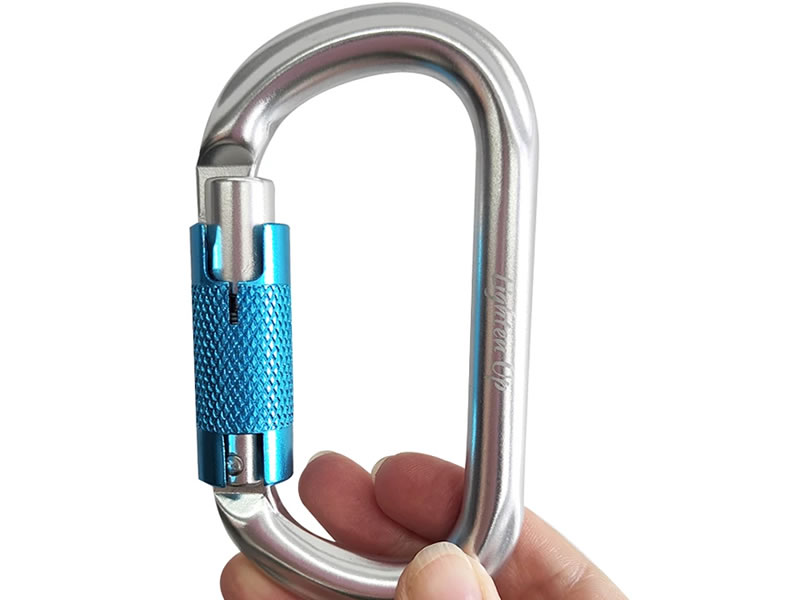
Buy Link: https://www.aliexpress.com/item/1005005646059608.html
A rating of 50 kilonewtons translates to a theoretical static breaking strength of approximately 11,240 pounds of force. To put this in perspective, it's the equivalent of holding the weight of a fully grown elephant. This is not about catching a human fall; it's about securing massive, static loads in the most demanding environments.
Who Needs This Level of Strength? The Professional Applications
These ultra-high-strength carabiners are purpose-built for specialized, high-stakes industries:
- Industrial Rigging and Construction: For lifting and positioning heavy structural steel beams, machinery, or concrete panels. They serve as a primary connection point in crane-rigging systems.
- High-Angle and Confined Space Rescue: Technical rescue teams use them as the foundational links in complex pulley and mechanical advantage systems for lifting heavy loads or extracting incapacitated persons from precarious positions.
- Professional Arborist and Logging Work: For securing large sections of tree trunks during controlled removal or for anchoring climbers and equipment in scenarios involving tremendous weight and potential shock loads.
- Marine and Offshore Operations: Securing heavy cargo, acting as connecting points for heavy-duty tethers, or within mooring systems where corrosion resistance is as vital as sheer strength.
- Military and Tactical Applications: For specialized vehicle recovery, heavy equipment deployment, or in engineering roles requiring absolute reliability under extreme stress.
Key Engineering and Design Features
To achieve this level of performance, these carabiners deviate significantly from their recreational counterparts:
- Material: They are almost exclusively manufactured from high-tensile forged steel. While some ultra-strong aluminum alloys approach this range, steel offers the necessary combination of ultimate strength, resistance to deformation under point loads, and durability against abrasion in harsh industrial environments.
- Massive Construction: There is no effort to save weight. These carabiners are substantial in hand, with thick spines and gates. The gate itself is often a robust, solid steel design rather than a wire gate.
- Sophisticated Locking Mechanisms: Beyond simple screw-locks, mechanisms may include double-acting locking sleeves, positive pin-lock systems, or triple-action gates that require deliberate, multi-step actions to open, preventing any accidental release.
- Certification and Traceability: They are rigorously tested and certified to relevant industrial standards (such as those from OSHA, ANSI, or specific European Norms) rather than just recreational climbing standards (UIAA/CE). Each carabiner is often serialized and accompanied by a detailed certificate of compliance, guaranteeing its tested strength.
Critical Considerations and Misconceptions
- Not for Recreational Climbing: Using a 50 kN steel carabiner on a climbing harness is a significant error. It is excessively heavy, its large size can hinder clipping, and its steel-on-steel interaction with other aluminum gear can cause accelerated wear. The right tool for the right job is paramount.
- Understanding "Strength" in a System: The carabiner's 50 kN rating is useless if the anchor point, sling, or rope it's connected to is rated for far less. In professional rigging, the entire system is engineered as a unit, with the carabiner being one link in a chain of appropriately rated components.
- Professional Knowledge Required: Selecting and using hardware of this caliber requires formal training in load dynamics, physics, and industry-specific safety protocols. It is not for amateur experimentation.
Conclusion: The Pinnacle of Connector Technology
A carabiner rated for 50 kN or higher represents the pinnacle of connective reliability. It is a tool born from necessity in fields where human lives and immensely valuable assets depend on flawless performance. Its design philosophy is pure, unadulterated strength and safety, with no concession to weight or casual use. For the professional rigger, rescuer, or engineer, it is a fundamental, trusted component. For the recreational enthusiast, it stands as a powerful reminder of the vast engineering spectrum that exists beyond the trailhead—a world where every gram of metal is calculated to uphold forces that defy imagination. Choosing one is not a matter of preference, but of strict, calculated necessity within a professionally managed safety system.




