




Can I Use Trekking Poles as a Tent Pole? The Ultimate Guide to Ultralight Shelter Systems
The answer is a definitive yes, but with critically important conditions. Using trekking poles as tent poles is a cornerstone of modern ultralight backpacking, but it is not a universal hack for any tent. Success depends on a symbiotic relationship between specifically designed shelter geometry and robust, reliable poles. Understanding this system is key to saving weight without compromising safety or comfort.
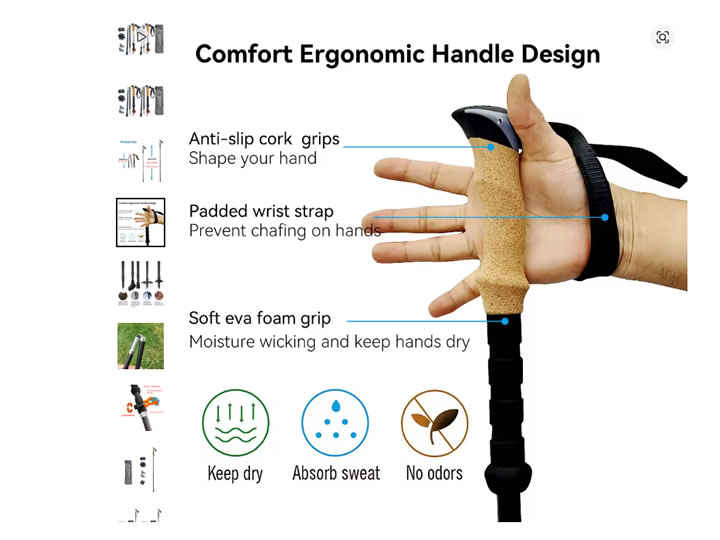
Recommended trekking pole purchase link: https://s.click.aliexpress.com/e/_c4M7OWaN
The Right Tent: Designed for the Purpose
You cannot safely use trekking poles to prop up a standard dome tent designed for flexible, segmented poles. The shelter must be specifically engineered as a "trekking pole tent." These shelters, offered by brands like Zpacks, Tarptent, Gossamer Gear, Six Moon Designs, and Durston Gear, have unique design features:
- Reinforced Attachment Points: They feature durable grommets, straps, or line-loc patches designed to securely cradle the trekking pole grip or tip.
- Geometric Dependency: Their pitch and structural integrity rely on the precise placement and angle of 1 or 2 poles. The tent's shape is a tension-based structure (like an A-frame or mid-style pyramid) where the pole(s) create the peak, and guylines provide stability.
- Weight Savings: This design eliminates the need for dedicated tent poles, saving 12 to 24 ounces or more—a significant reduction in pack weight.
The Right Trekking Poles: More Than Just Sticks
Not all trekking poles are suitable. The ideal poles for dual-use as tent poles must be:
- Adjustable: They must extend to the exact height specified by the tent manufacturer (usually between 110cm and 145cm). Fixed-length or foldable Z-poles are often incompatible unless they match the required height perfectly.
- Sturdy and Reliable: They bear structural loads in wind. Aluminum poles (6061 or 7075 alloy) are generally preferred for their strength and durability over carbon fiber in this role, though many use carbon successfully.
- Have a Secure Locking Mechanism: A dependable flick-lock is superior to a twist-lock for maintaining precise height under tension and vibration.
How It Works: The Setup
A typical setup for a two-pole A-frame tent involves:
- Extending both poles to the prescribed length.
- Inserting the tip into a ground-based grommet or strap, or placing the grip end into a peak attachment.
- Raising the structure and staking out corners to create initial tension.
- Fine-tuning guyline tension to achieve a taut, stormworthy pitch.
Critical Advantages and Important Trade-offs
Advantages:
- Significant Weight Savings: The primary benefit.
- Reduced Pack Volume: No bulky tent poles to carry.
- System Simplicity: One piece of gear serves two vital functions.
- Pitch Flexibility: Allows for adjusting ventilation and height based on conditions.
Trade-offs and Considerations:
- Learning Curve: Pitching requires more skill and practice than a freestanding tent.
- Site Dependency: Requires suitable ground for staking. May be challenging on rocky or super-soft terrain.
- Condensation Management: Single-wall trekking pole tents (common in this category) require vigilant ventilation to manage condensation.
- Pole Security: You must be meticulous about not misplacing or damaging your poles, as they are now mission-critical for both hiking and shelter.
A Stern Warning: What NOT to Do
Never attempt to retrofit a standard tent by removing its poles and substituting trekking poles unless the manufacturer explicitly provides instructions and reinforcement kits. The fabric and seams are not designed for the different stress points, risking tears, collapse in wind, or a ruined tent.
Top Recommendations for the System
If you're interested in this system, start with:
- Tent: The Durston X-Mid series, Tarptent Double Rainbow, or Six Moon Designs Lunar Solo are excellent, well-regarded entry points.
- Poles: The Cascade Mountain Tech Aluminum poles (for value and strength) or Black Diamond Alpine Carbon Cork poles (for premium performance) are widely used and trusted.
In conclusion, using trekking poles as tent poles is a brilliant, weight-saving synergy, but it is a package deal. It requires investing in a compatible shelter and understanding that your poles become part of a integrated life-support system. When done correctly, it represents the pinnacle of efficient, multi-use gear strategy in the backcountry.




