




How to Use Trekking Poles for Stream Crossings
Stream crossings are one of the most hazardous yet common obstacles in hiking and backpacking. Slick rocks, hidden holes, and unpredictable currents can quickly turn a babbling brook into a dangerous situation. While careful footwork is essential, your trekking poles transform from walking aids into critical safety tools during a ford. Used correctly, they provide a vital "third leg" (or rather, two extra legs) of stability, helping you navigate safely to the other side.
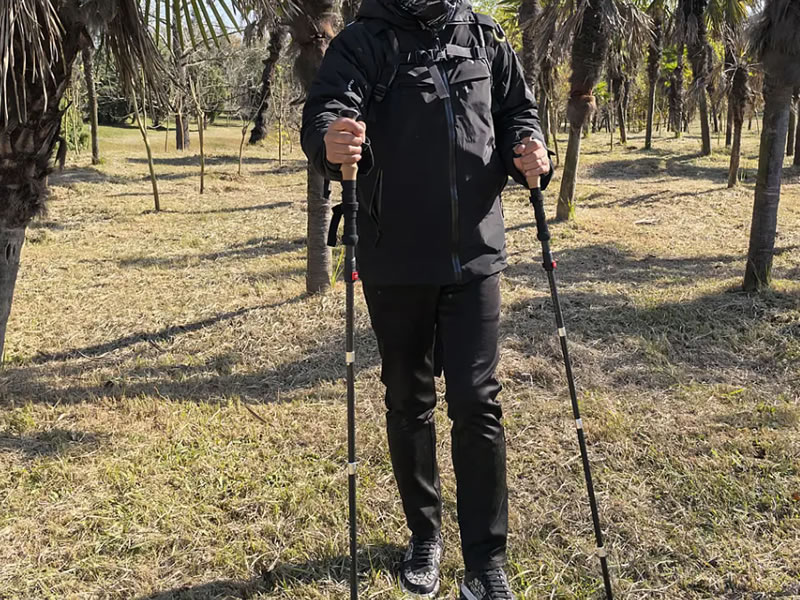
Recommended trekking pole purchase link: https://s.click.aliexpress.com/e/_c4M7OWaN
The Core Principle: The Three-Point Rule
The fundamental technique for any uneven or unstable terrain is the Three-Point Rule. You must always maintain three solid points of contact with the ground. When crossing a stream, this means moving only one limb—one pole or one foot—at a time, while the other three remain planted for balance.
Here’s the step-by-step application:
- Stand firm with both poles planted securely in front of you and your feet stable.
- Advance one pole, probing the riverbed ahead for depth, stability, and the best footing. Place it firmly.
- Step forward with the opposite foot (e.g., right pole advance, then left foot steps). This diagonal movement keeps your center of gravity balanced.
- Plant your next pole, then move the opposite foot. Repeat in a slow, deliberate, and stable rhythm.
Pre-Crossing Preparation: Don't Rush In
- Assess the Crossing: Look for the widest, slowest-moving section of the stream—often where it's shallower. Identify a clear path and your exit point on the opposite bank.
- Adjust Your Poles: Shorten your poles slightly. A more upright posture in moving water is generally more stable than a forward lean.
- Unbuckle Your Pack: Before entering the water, unbuckle your backpack's hip belt and sternum strap. In the unlikely event of a fall, you need to be able to shed your pack quickly to avoid being pinned underwater.
- Consider Footwear: Many experienced hikers cross in their hiking shoes (draining them afterward) for superior traction over socks or bare feet, which are vulnerable to sharp rocks.
Advanced Techniques for Current & Slick Surfaces
- Plant Poles Upstream: Always plant your poles against the current (i.e., upstream from your body). The force of the water will push the pole into the riverbed, creating a much more secure brace. A pole planted downstream can be swept out from under you.
- Angle for Support: Don't plant poles vertically. Angle them slightly downstream and outward, creating a strong, braced tripod with your body at the center. This angle provides the best resistance to lateral forces from the current.
- Shuffle, Don't Step: On extremely slick, algae-covered rock beds, take small, shuffling steps. Slide your foot forward while keeping it in constant contact with the bottom, rather than lifting it high and risking a slip on the placement.
- Team Crossing: For stronger currents, link arms with a partner, forming a supportive triangle with your bodies and poles facing upstream. Move together using the three-point rule.
What to Avoid
- Never rely on a single pole as an anchor in fast current; always use both.
- Don't look down at your feet; this throws off your balance. Look ahead at your exit point or a fixed spot on the opposite bank.
- Avoid crossing where the water is above knee-deep if possible, as the force of the current increases dramatically. Turn back if it looks or feels unsafe.
- Don't use collapsing poles at full extension under heavy lateral load; ensure twist or flip locks are fully secured.
Conclusion: A Tool for Confidence, Not Invincibility
Trekking poles are not magic wands that make all stream crossings safe. Their primary function is to increase your stability, provide critical sensory information about the riverbed, and give you time to react. They slow you down to a deliberate, safe pace and significantly reduce the load on your knees with each step. By mastering the three-point rule and upstream bracing technique, you turn a potentially nerve-wracking obstacle into a manageable, even confidence-building, part of your hike. Remember, the smartest tool is your judgment—when in doubt, scout a safer crossing or wait for conditions to improve.




