




Carbon Fiber Hiking Poles: Are They Durable Enough for Rough Trails?
The allure of carbon fiber hiking poles is undeniable: they are remarkably lightweight, dampen trail vibration effectively, and often carry a premium, high-tech appeal. Yet, for hikers who regularly tackle rocky scrambles, root-infested paths, or uneven alpine terrain, a critical question arises: Can these sleek poles withstand the punishment of rough trails, or are they a fragile luxury? The answer is nuanced. High-quality carbon fiber poles are absolutely durable enough for most rough trails, but their durability profile is fundamentally different from that of traditional aluminum poles.
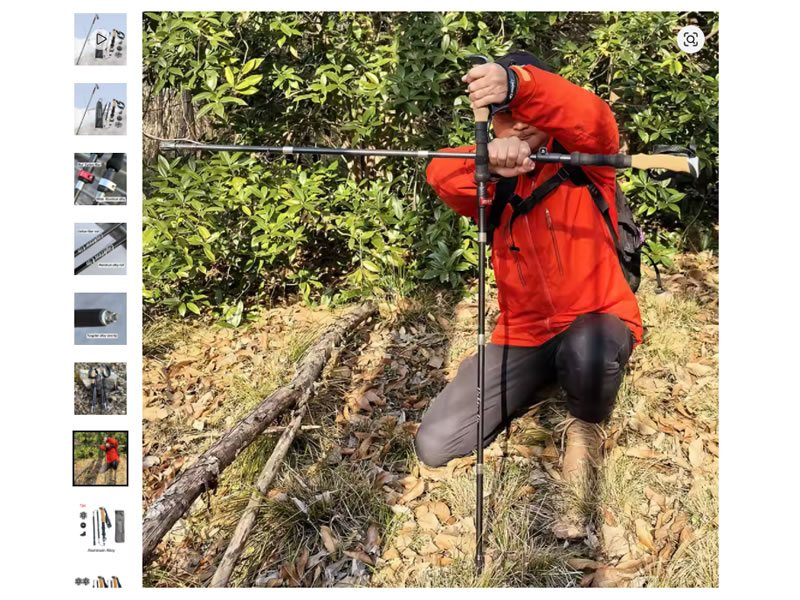
Recommended trekking pole purchase link: https://s.click.aliexpress.com/e/_c4M7OWaN
Understanding the Material: The Science of Carbon Fiber
Carbon fiber poles are not made from a single material but from thin, strong crystalline filaments of carbon woven into a fabric and set within a resin matrix. This construction gives them unique properties:
- High Strength-to-Weight Ratio: They can be as strong as or stronger than aluminum while being significantly lighter.
- Vibration Dampening: The composite structure absorbs high-frequency "buzz" from the trail, reducing fatigue in hands and arms.
- Directional Strength: They offer exceptional longitudinal strength—resistance to the direct compressive force of planting and leaning on them.
The vulnerability lies in lateral or point-impact forces. A sharp, direct hit from a rock against the shaft, or getting the pole pinned and leveraged in a tight crack, can cause the resin matrix to crack or splinter. Unlike aluminum, which may bend under such stress, carbon fiber is more likely to fail catastrophically (snap).
Carbon Fiber vs. Aluminum on Rough Terrain: A Direct Comparison
| Feature | Carbon Fiber Poles | Aluminum Poles (7075-T6) |
|---|---|---|
| Weight | Excellent (Significantly lighter) | Good |
| Vibration Dampening | Excellent | Fair (More "buzz" felt) |
| Longitudinal Strength | Excellent | Excellent |
| Impact Resistance | Good, but can fail from sharp side impacts | Excellent (more likely to bend than snap) |
| Failure Mode | Can crack or snap | Usually bends first |
| Fatigue Resistance | Excellent | Excellent |
| Cold Weather Performance | Excellent (Does not get cold to touch) | Good (Can feel very cold) |
When Carbon Fiber Excels and When to Be Cautious
Carbon fiber is an excellent choice for rough trails when:
- Your primary concern is weight savings on long, grueling ascents.
- You value reduced arm fatigue from vibration over miles of rocky ground.
- You are generally mindful of your pole placement and don't regularly use them to hoist or leverage your body weight sideways.
- You hike on trails that are rough but where poles follow a natural planting motion (e.g., rocky paths, rooty forests).
Consider aluminum or exercise extra caution with carbon fiber when:
- The terrain involves frequent technical scrambling where poles might get jammed in rocks and subjected to extreme lateral force.
- You are a heavier hitter who uses poles aggressively for stability, not just for balance.
- You often hike in rockfall-prone areas or conditions where the poles might suffer unseen impacts.
- You prioritize field-reparability—a bent aluminum pole can sometimes be straightened in a pinch; a shattered carbon pole cannot.
Maximizing the Durability of Your Carbon Fiber Poles
- Invest in Quality: Not all carbon fiber is equal. Poles from reputable brands (like Black Diamond, LEKI, or MSR) use higher-grade fibers and better construction techniques. Look for models with reinforced impact zones or thicker shaft diameters.
- Choose the Right Tip: Always use the included carbide/tungsten tips. The metal tip takes the brunt of abrasion, protecting the carbon shaft end. Replace them when worn down.
- Mind Your Technique: Avoid using your poles to lever your body sideways or to test loose rocks. Plant them vertically as much as possible.
- Inspect Regularly: Check the shafts for any hairline cracks, chips, or unusual sounds (creaking) after a hard trip. Catching early damage can prevent a total failure on the trail.
Top Durable Carbon Fiber Picks for Rough Trails
- Black Diamond Distance Carbon Z: A favorite for its blend of ultralight weight, exceptional packability, and proven durability in demanding environments like thru-hikes.
- LEKI Micro Vario Carbon: Known for its precise SpeedLock 2 system and robust construction, it’s a top choice for demanding hikers who want reliable performance.
- Cascade Mountain Tech Carbon Fiber: Proof that durability doesn't have to break the bank. These poles offer impressive strength and performance for their price, making them a low-risk entry into carbon fiber.
The Verdict: A Worthy Trade-off for Most Hikers
For the vast majority of hikers tackling rough trails, high-quality carbon fiber poles offer more than enough durability. The benefits of reduced weight and vibration often lead to less overall fatigue, which can enhance safety and enjoyment. The risk of a catastrophic failure, while real, is relatively low for a mindful hiker.
Final Recommendation: If you are a weight-conscious backpacker, thru-hiker, or anyone who values a smooth, light feel on challenging terrain, carbon fiber is a superb and durable choice. If your style is exceptionally aggressive, or your terrain is akin to low-grade mountaineering, the predictable bend-but-not-break nature of high-grade 7075 aluminum might offer greater peace of mind. In either case, choosing a well-made pole from a trusted brand is your first and best step toward durability.




