




Are There Hiking Poles Good for Both Hiking and Backpacking?
For many outdoor enthusiasts, the line between day hiking and multi-day backpacking is fluid. One weekend you’re on a local trail for a few hours, the next you’re loaded for a three-day trek. Naturally, you might wonder: do you need two different pairs of trekking poles, or can one versatile pair excel at both? The answer is a resounding yes. While specialized poles exist for ultralight speed or extreme mountaineering, a well-chosen, general-purpose pair of trekking poles can be the perfect all-rounder for the vast majority of your adventures.
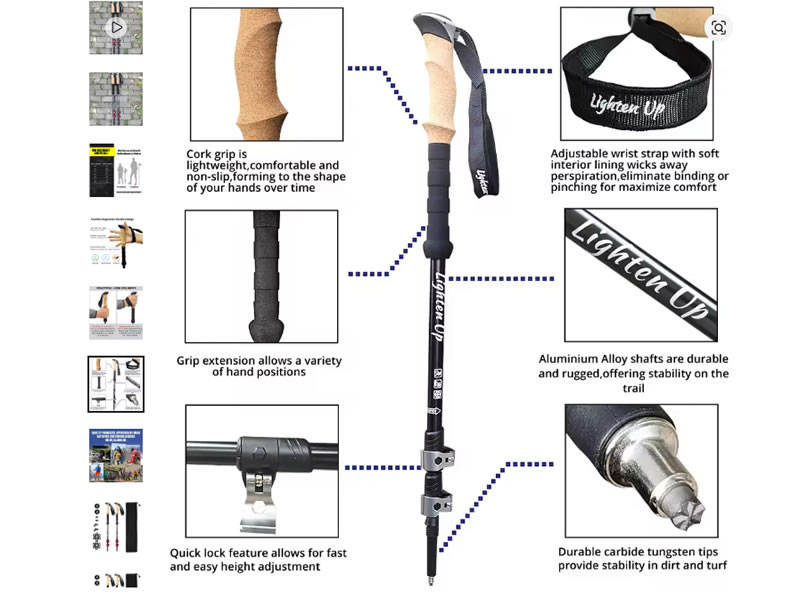
Recommended trekking pole purchase link: https://s.click.aliexpress.com/e/_c4M7OWaN
The Overlapping Demands: What Both Activities Require
Day hiking and backpacking share fundamental needs from a trekking pole. Both require:
- Reliable Stability: For navigating roots, rocks, and stream crossings.
- Joint Protection: To reduce impact on knees and hips, especially on descents.
- Adjustability: To fine-tune length for uphill, downhill, and flat sections.
- Durability: To withstand regular use and occasional rough treatment.
The primary difference lies in intensity and load. Backpacking adds a heavy pack, which increases stress on your joints and on the poles themselves. This means the poles you choose must be robust enough to handle that added, sustained force without being so heavy that they’re a burden on a fast-and-light day hike.
The Anatomy of the Perfect Dual-Use Pole
Look for these key features to find a pole that bridges both worlds seamlessly:
- Material: The Strength-to-Weight Sweet Spot7075 Aluminum: The top recommendation for a dual-use pole. This aerospace-grade alloy offers an exceptional balance: it’s significantly stronger and more durable than standard 6061 aluminum, yet remains relatively lightweight. It can reliably support a backpacking load and endure the rigors of off-trail use, while still being light enough for enjoyable day hikes.High-Quality Carbon Fiber: A superb choice if your priority is minimizing weight and vibration. It excels on long days where fatigue is a factor. Opt for reputable brands to ensure the carbon construction is robust enough for the torque of a heavy pack. The trade-off is higher cost and slightly less impact resistance than aluminum.
- Locking Mechanism: Non-Negotiable ReliabilityThe locking system is the most common point of failure. For dual-use, external flip locks (lever locks) are mandatory. They are easier to operate with cold or tired hands, provide visible confirmation of being locked, and are far less prone to slipping under the heavy, dynamic load of a backpack. Avoid twist locks for this application.
- Three-Section Adjustable DesignThis is the standard and most versatile design. It provides a wide range of length adjustment for different users and terrain, and collapses to a manageable size to strap to your backpack. While Z-style folding poles are popular for ultralight backpacking, their limited adjustability makes them less ideal as a true “do-it-all” tool.
- Comfortable Grips and StrapsYou’ll be holding these for miles, with and without a pack.Grips: Cork is ideal as it molds to your hand and wicks moisture. Foam (EVA) is soft and sweat-absorbent. Both are excellent choices.Straps: Padded, adjustable straps are crucial. They allow you to transfer weight off your hands, which is especially important under a heavy pack.
Top Recommendations: The Best of Both Worlds
These models are consistently praised for their ability to handle everything from casual day hikes to serious backpacking trips.
- Black Diamond Trail Pro 3: The quintessential dual-use workhorse. Its 7075 aluminum shaft is built to withstand years of heavy use. The FlickLock Pro levers are the industry benchmark for secure, easy adjustment. It’s durable enough for a thru-hike yet refined enough for a daily driver. Its extended foam grip adds versatility for different hand positions.
- Cascade Mountain Tech Carbon Fiber Quick Lock: The ultimate value champion. It proves that a dual-use pole doesn’t require a premium price. It offers a 100% carbon fiber shaft (for lightweight vibration dampening), cork grips, and reliable flip locks at a fraction of the cost of major brands. It’s a phenomenal all-purpose starter pole or a reliable spare.
- REI Co-op Flash Carbon: A fantastic balanced choice from a trusted retailer. It blends a lightweight carbon fiber shaft with user-friendly lever locks and comfortable grips. It hits a sweet spot of performance, weight, and price, backed by REI’s excellent return policy and customer service.
- Komperdell Crossover Powerlock: A European-engineered powerhouse. Known for alpine toughness, these poles feature an extremely robust Powerlock lever system and often include an anti-shock feature (toggleable) for descents. They are built to last a lifetime of varied use.
Making Your Choice: How to Decide
Consider your personal balance:
- If your priority is maximum durability and you often carry heavy loads, lean toward the 7075 aluminum of the Black Diamond Trail Pro.
- If you prioritize light weight for long distances and want the best value, the Cascade Mountain Tech Carbon Fiber is a standout.
- Visit a store if possible. Feel the grips, test the lock mechanisms, and get a sense of the weight in your hand.
Conclusion: One Pole to Rule Them All
You do not need a separate quiver of trekking poles. A single, well-chosen pair built on the principles of durable materials, reliable locks, and versatile adjustability will serve you brilliantly across 95% of your hiking and backpacking adventures. Investing in a versatile model like the Black Diamond Trail Pro 3 or the Cascade Mountain Tech Carbon Fiber means you’ll always have the right tool for the trail, whether it’s a 5-mile loop or a 50-mile wilderness trek. Simplify your gear closet and enhance your performance with a true all-rounder.




