




Can I Mix and Match Different Hiking Pole Parts?
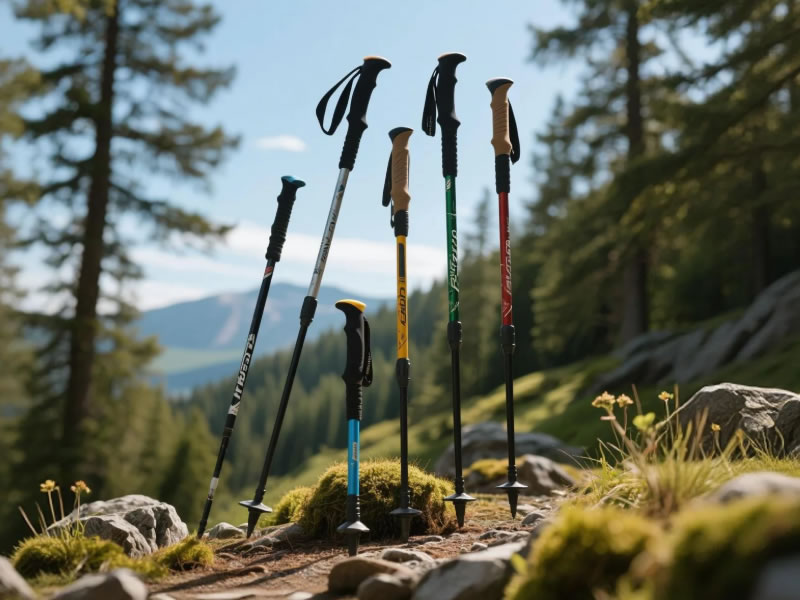
The desire to customize, repair, or extend the life of gear is natural for any outdoor enthusiast. With trekking poles, you might wonder if you can create a "Frankenpole" by combining the lightweight shaft of one brand with the comfortable grip of another, or by scavenging parts from an old pair. While limited, careful mixing is possible with certain components, it is a practice fraught with risk and is generally not recommended for critical structural parts. Understanding what can be interchanged and what absolutely cannot is essential for your safety on the trail.
Recommended trekking pole purchase link: https://s.click.aliexpress.com/e/_c4M7OWaN
The Safe Zone: Generally Interchangeable Parts
These components are often standardized enough to swap between brands, provided thread patterns and sizes match.
- Tips (Carbide/Tungsten): The threaded metal tips that contact the ground are the most universal part. Most poles use a standard M6 or M8 threaded insert. If the threads match, you can often replace a worn Komperdell tip with a Black Diamond or aftermarket replacement. Always verify thread size before installation.
- Baskets (Trekking & Snow): Like tips, baskets typically slide over the shaft and are held in place by the tip's threading. As long as the inner diameter of the basket's collar matches the outer diameter of your pole's shaft just above the tip, they can usually be interchanged. This is common when upgrading to larger snow baskets from a different brand.
- Rubber Trekking Paws/Ferules: These small rubber covers that fit over the metal tip for use on pavement are almost always universal.
The High-Risk Zone: Critical Structural Components
Mixing these parts is where severe danger lies.
- Shaft Sections (The Most Dangerous): Never mix shaft sections from different brands or even different models within the same brand. Pole sections are engineered as a system. The outer diameter (OD) of a lower section must perfectly match the inner diameter (ID) of the section it slides into, with tolerances of less than a millimeter. Even a slight mismatch will cause:Catastrophic Failure: The lock cannot clamp securely, leading to sudden collapse under load.Weak Points: Stress will concentrate at the mismatch, causing the shaft to bend or break.Lock Mechanism Damage: You can strip or break the locking mechanism.
- Locking Mechanisms (Flip Locks, Twist Locks): These are highly proprietary. A Black Diamond FlickLock lever is designed for a specific shaft diameter and cam shape. It will not function correctly on a Leki or Komperdell shaft. Forcing an incompatible lock is a guaranteed recipe for a sudden, dangerous failure.
- Grips: While it may seem harmless, grip interchangeability is very low. Grips are bonded or molded onto a specific shaft diameter. Removing a grip often destroys it, and installing a new one requires precise sizing and strong adhesive. The ergonomics are also designed for the pole's balance. It's rarely worth the effort and risk of a poor bond.
The Gray Area: Straps and Accessories
- Wrist Straps: These can often be swapped if the attachment loop is similar. However, strap design is integral to the pole's ergonomics and intended use (e.g., a trail running strap vs. a backpacking strap).
- Extender Sections/Probes: Some brands sell avalanche probe extensions that connect to their specific pole shafts. These are brand-locked systems and should not be mixed.
Best Practices and Safe Alternatives
If you need to replace a part, follow this hierarchy:
- Manufacturer Direct Replacement: Always the best and safest option. Contact the manufacturer or check their website for official replacement parts for your exact model and year. This guarantees compatibility.
- Aftermarket Generic Parts: For tips and baskets, reputable aftermarket brands (like MSR, Baskets From Bozeman) make high-quality, standardized replacements. Double-check your pole's specs against theirs.
- Cannibalize from the Same Make & Model: Using a section from an identical, broken pole as a donor is usually safe, as dimensions and locks will match.
- Professional Repair: Some companies, like LEKI, offer professional repair services. Send in your poles, and they will fit the correct parts.
The Bottom-Line Risks: Why It Matters
A trekking pole is a load-bearing safety device. When you lean on it during a steep descent or a river crossing, you are trusting it with a significant portion of your body weight and balance. A failure due to a mismatched part can result in:
- A serious fall on rugged terrain.
- Joint injury from the sudden loss of support.
- A compromised situation in a remote location.
Final Verdict: Customization with Caution
Can you mix and match? For non-structural, threaded accessories like tips and baskets—yes, with careful verification. For anything structural—shafts, locks, and grips—emphatically no.
The mantra should be: "When in doubt, don't swap it out." The potential for cost savings or customization is never worth the risk of catastrophic failure on the trail. Invest in quality poles from brands with good customer support and parts availability. When a component wears out, replace it with the correct part from the original manufacturer. Your knees—and your safety—will thank you for the predictability and reliability of a properly maintained, non-frankensteined tool.




