




Hiking Poles That Double as a Self-Defense Tool: Reality or Myth?
The idea of transforming everyday gear into a multipurpose survival tool is compelling. For solo hikers, particularly women or those venturing into remote areas, the question often arises: can my trusty trekking poles serve as an effective self-defense tool? The answer is nuanced, sitting in a gray area between cautious reality and potentially dangerous myth. While poles offer certain defensive possibilities, understanding their severe limitations is crucial for realistic safety planning.
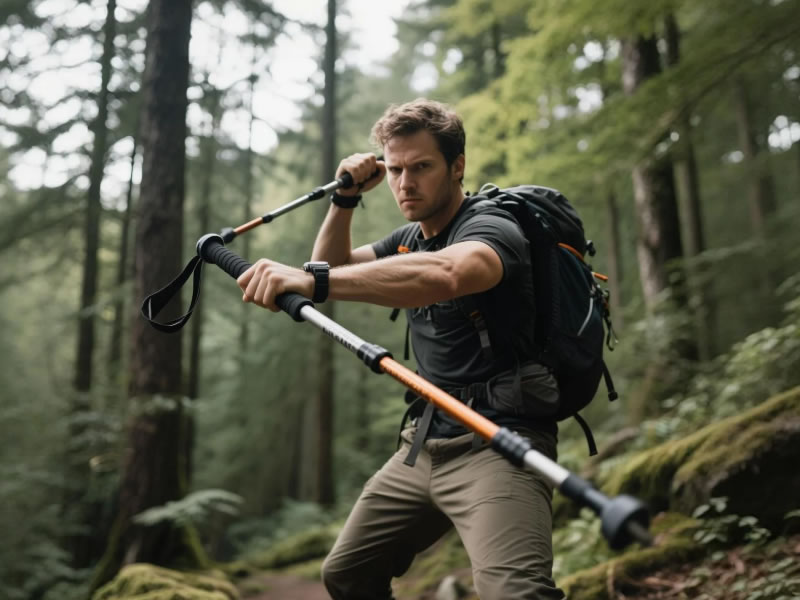
Recommended trekking pole purchase link: https://s.click.aliexpress.com/e/_c4M7OWaN
The Allure and the Argument For "Reality"
Proponents of the self-defense pole point to several tangible features:
- Creating Distance: A hiking pole's primary function—extending your reach—is also a fundamental self-defense principle. It can be used to maintain a buffer zone between you and a perceived threat, whether human or animal.
- Sturdy Construction: Quality poles, especially those made of aircraft-grade aluminum, are designed to withstand significant stress and impact. They could theoretically be used to parry, block, or deliver a targeted strike.
- Psychological Deterrent: The presence of a pole in hand makes a person appear more prepared and potentially more difficult to approach casually. The act of brandishing it can signal readiness to defend oneself.
- Improvised Utility: In a worst-case scenario, any solid object is better than nothing. A swift, sharp jab with the carbide tip to a sensitive area could create a crucial opportunity to escape.
The Critical Limitations and the "Myth"
Relying on a trekking pole for self-defense is fraught with problems, making it a potentially dangerous myth if overestimated.
- They Are Not Weapons: Poles are engineered for axial loading (pushing straight down). A hard lateral strike against a resistant force can bend or break the shaft, especially at the locking mechanisms. A failing pole in a confrontation is worse than no pole at all.
- Skill and Reaction Time are Paramount: Effectively wielding any object for defense requires training, practice, and the ability to overcome the "freeze" response in a high-stress adrenaline dump. Without specific training, fumbling with pole straps or locks could waste precious seconds.
- Legal and Ethical Gray Areas: In many jurisdictions, the stated intent for carrying an item can matter. If you describe your poles primarily as self-defense tools, they may be classified differently than standard sporting goods. Using force, even in self-defense, carries serious legal implications.
- A False Sense of Security: The greatest danger is the illusion of preparedness. Choosing poles for a perceived defensive edge might lead a hiker to neglect more proven and effective safety strategies.
The Wildlife Question: Bears and Other Animals
This is where the myth is most prevalent—and most risky.
- Against Large Wildlife (Bears, Moose): A trekking pole is virtually useless. It will not stop a determined bear. Professional guides emphasize that bear spray is the only proven, effective deterrent for close-range bear encounters. Waving a pole may even provoke or antagonize an animal.
- Against Smaller Nuisance Animals: A pole can be more effective for confidently shooing away a curious fox, coyote, or off-leash dog by making yourself look larger and using the pole to enforce space.
A Realistic Safety Strategy: Beyond the Pole
Your safety on the trail hinges on preparation and awareness, not on improvising weapons. Prioritize this hierarchy:
- Prevention & Awareness: Your best tools are situational awareness, hiking with a companion, making noise, and knowing how to avoid confrontations.
- Dedicated Safety Gear: For wildlife concerns, carry and know how to use EPA-rated bear spray (effective against various threats). A loud personal alarm or whistle can disorient a threat and attract help.
- Communication: A charged satellite communicator (e.g., Garmin inReach, SPOT) allows you to call for help from anywhere.
- The Pole as a Last-Resist Supplement: If you have no other option, a sturdy pole might help you create an opportunity to deploy your primary defense (spray, alarm) or to escape. Think of it as a tool for creating distance and buying time, not for engaging in a fight.
Conclusion: A Tool for Stability, Not Combat
While a well-built hiking pole has the physical potential to be used defensively in a dire emergency, marketing or viewing it as a self-defense tool is misleading and potentially hazardous. Its effectiveness is minimal compared to dedicated safety equipment, and reliance on it fosters a false sense of security.
Invest in a pole for what it does brilliantly: providing stability, reducing joint fatigue, and improving your hiking efficiency. For genuine personal safety, invest separately in proven deterrents like bear spray, a personal alarm, communication devices, and—most importantly—knowledge and awareness. The true "self-defense" power of a hiking pole lies in its ability to help you navigate terrain safely and avoid a fall, keeping you in control and confident on the trail.




