




Emergency whistle integrated into Walking poles?
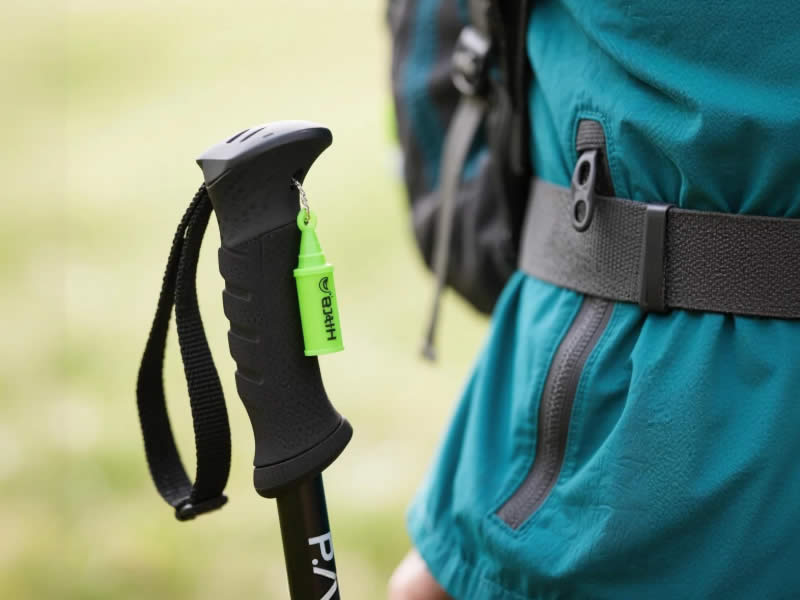
In the backcountry, the ability to signal for help can mean the difference between a swift rescue and a prolonged survival situation. While experienced hikers often carry a dedicated whistle on their pack strap or clothing, a growing number of walking poles now feature integrated emergency whistles. These built‑in whistles offer convenience and ensure that a signaling device is always attached to gear you are already carrying. But are they a reliable substitute for a traditional whistle? Understanding their design, limitations, and best‑use practices will help you make an informed decision about your emergency signaling setup.
Recommended trekking pole purchase link: https://s.click.aliexpress.com/e/_c4M7OWaN
Where Are Integrated Whistles Located?
Manufacturers incorporate emergency whistles into walking poles in two primary locations:
- In the grip – Some poles have a whistle molded into the top of the grip or beneath a removable cap. A simple blow activates the whistle without altering the pole’s ergonomics.
- In the strap buckle – A more common design places the whistle within the wrist strap buckle. The buckle is shaped to function as a whistle when you blow into it. This design keeps the whistle accessible without adding bulk to the grip.
Brands such as Leki, Black Diamond, and Komperdell offer select models with integrated whistle features, particularly in their Nordic walking and trekking lines.
Advantages of Integrated Whistles
1. Always Attached to Gear You Carry
Unlike a whistle that may be forgotten at home or buried in a pack, an integrated whistle is physically part of your poles. Since most hikers do not venture out without their poles, the whistle is consistently available.
2. Immediate Accessibility
In an emergency, seconds matter. A whistle integrated into the grip or strap can be brought to your lips almost instantly—no searching through pockets or unclipping from a pack strap.
3. No Extra Weight or Bulk
Integrated whistles add no noticeable weight and do not require separate storage. For minimalist hikers or those counting grams, this is a meaningful advantage.
4. Durable and Weather‑Resistant
These whistles are designed to withstand the same conditions as the poles themselves—rain, snow, mud, and impacts. They typically use stainless steel or high‑impact plastic components that resist corrosion.
Limitations to Consider
1. Accessibility When Poles Are Not in Hand
If you are injured and unable to reach your poles—or if they are dropped, pinned, or separated from you—the integrated whistle is inaccessible. This is the most significant limitation. A whistle attached to your person (pack strap, clothing) remains with you regardless of gear status.
2. Variable Volume and Reliability
Not all integrated whistles are created equal. Some produce a surprisingly loud, far‑carrying tone; others are relatively weak. Volume can also be affected by how the whistle is designed within the strap buckle or grip. Before relying on an integrated whistle, test it in the field and compare it to a standard rescue whistle (typically rated at 100–120 decibels).
3. Potential for Obstruction
Mud, snow, or debris can clog small whistle openings. While this is also true for any whistle, integrated designs may be harder to clear quickly in an emergency.
4. Comfort Trade‑Offs
A whistle built into the strap buckle may slightly alter the buckle’s profile. Most users find this negligible, but those with sensitive hands may notice the difference.
Using Your Integrated Whistle Correctly
If your poles have an integrated whistle, follow these best practices:
- Know the signal – The universal distress signal is three blasts, repeated with a pause between sets. One or two blasts may be interpreted as casual communication.
- Test before you go – At the start of each season or before a remote trip, test your whistle to ensure it functions and to gauge its volume.
- Keep it clean – Rinse the whistle opening periodically to prevent dirt buildup. A quick blow of air before use can clear minor obstructions.
- Practice retrieving – In a calm moment, practice bringing the whistle to your lips while holding your poles normally. Muscle memory matters in a real emergency.
Integrated Whistle vs. Dedicated Whistle
| Feature | Integrated Whistle | Dedicated Whistle |
|---|---|---|
| Always with poles | Yes | No (must be carried separately) |
| Accessible if poles lost | No | Yes (if attached to person) |
| Volume | Variable | Typically 100–120 dB |
| Extra weight | None | Minimal (5–15 grams) |
| Backup option | Primary for some | Easily carried as backup |
Best Practice: Layered Signaling
The most reliable approach is redundancy. Use an integrated whistle as a convenient primary or secondary option, but always carry a dedicated whistle attached to your person. Options include:
- A whistle built into a pack sternum strap (common on many hiking packs).
- A small rescue whistle on a lanyard worn around the neck.
- A whistle attached to a zipper pull or belt loop.
By layering your signaling tools, you ensure that even if you drop your poles or become separated from your pack, you still have a way to call for help.
Final Thoughts
Emergency whistles integrated into walking poles are a thoughtful feature that adds a layer of safety without compromising the poles’ primary function. They are always attached to gear you are already carrying and can be deployed almost instantly. However, they are not a complete substitute for a dedicated whistle attached to your person. The safest approach combines both: use your poles’ integrated whistle as a convenient option, and back it up with a reliable, high‑volume whistle that stays with you no matter what. In the wilderness, redundancy in safety gear is never a burden—it is a lifeline.




