




Reflective elements on Walking poles for night safety?
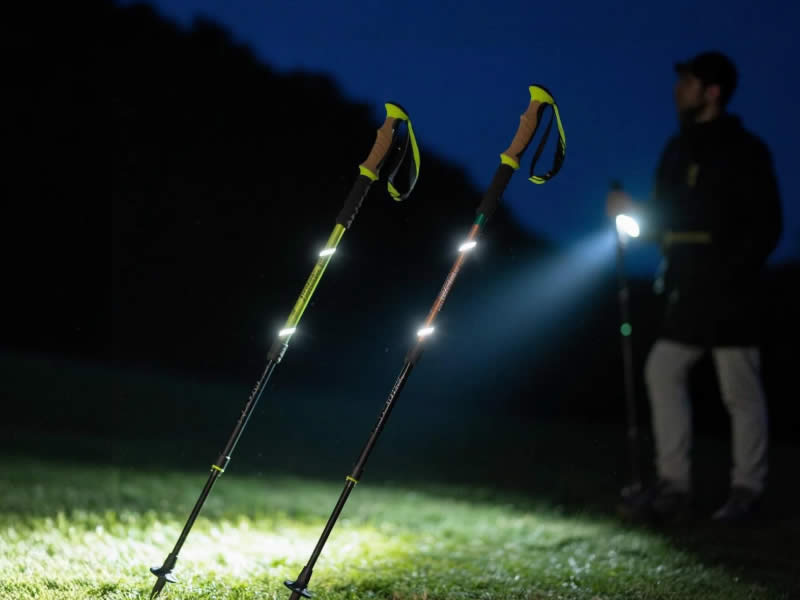
For hikers who find themselves on trails after sunset, walking along roadways at dawn, or navigating camp in the dark, visibility is a critical safety concern. While headlamps and reflective clothing are standard precautions, one piece of gear often overlooked is the walking pole. Many modern walking poles now incorporate reflective elements—decals, logos, strips, or even full-shaft coatings—designed to catch and return light. These passive reflectors can significantly enhance your visibility to others, adding a crucial layer of safety with no weight penalty. Understanding how they work, where to find them, and how to use them effectively can make your night excursions safer for everyone.
Recommended trekking pole purchase link: https://s.click.aliexpress.com/e/_c4M7OWaN
How Reflective Elements Work
Reflective materials use a technology called retroreflection. Unlike a mirror that reflects light at a specific angle, retroreflective materials bounce light directly back toward its source—whether that’s a car’s headlights, a fellow hiker’s headlamp, or a searchlight. This means that even a small reflective patch appears brightly illuminated to the light source, while remaining relatively dim from other angles. For night safety, this is ideal: it makes you visible precisely when someone else is shining light in your direction.
On walking poles, reflective elements are typically:
- Printed decals or logos – Often integrated into the brand’s graphics.
- Reflective tape strips – Wrapped around the shaft at intervals.
- Full reflective coatings – Less common, but available on some high‑visibility models.
- Reflective wrist straps or buckles – Some straps incorporate reflective threading.
Why Reflective Poles Matter for Night Safety
1. 360‑Degree Visibility
A headlamp illuminates where you look, and reflective clothing covers your torso. But walking poles extend to your sides and move dynamically with your stride. A reflective pole shaft creates a moving point of light that catches attention from all directions—especially from vehicles approaching from the side or from hikers behind you on a trail.
2. Motion Attracts Attention
The human eye is drawn to motion. A reflective pole swinging with each step creates a rhythmic, moving light pattern that is more noticeable than a stationary reflective vest. This is particularly valuable along roadways where drivers may otherwise overlook a pedestrian.
3. Passive Safety
Reflective elements work without batteries. If your headlamp fails, your reflective poles continue to make you visible to anyone with a light source. This redundancy is invaluable in emergency situations or when electronics run out of power.
4. Low‑Cost, Zero‑Weight Addition
For manufacturers, adding reflective decals adds negligible cost and no weight. For consumers, choosing a pole with reflective elements requires no trade‑off in performance or pack weight.
Where Reflective Elements Are Placed
| Location | Visibility |
|---|---|
| Upper shaft | Most visible when poles are planted; catches light from headlamps at eye level |
| Lower shaft | Visible when poles are swinging; catches light from vehicle headlights |
| Wrist strap | Moves with your hand; adds visibility at arm level |
| Tip area | Less common, but helpful when poles are extended or used for signaling |
Choosing Poles with Reflective Features
When shopping for walking poles, consider reflective elements as a safety feature alongside weight, adjustability, and grip material.
- Check product descriptions – Look for terms like “reflective decals,” “retroreflective logos,” or “night visibility.”
- Inspect in person – In a store, shine a bright light on the poles to see how effectively the reflective elements illuminate.
- Consider aftermarket options – If your current poles lack reflective elements, you can add reflective tape. Use high‑quality, weather‑resistant tape designed for outdoor use. Wrap strips around the upper shaft in a spiral pattern for 360‑degree visibility.
Maintaining Reflective Elements
Reflective surfaces lose effectiveness when dirty, scratched, or covered by mud.
- Clean regularly – Wipe poles with a damp cloth after muddy hikes. Dirt accumulation dims reflectivity.
- Avoid abrasion – When storing poles together, reflective decals can rub against each other. Use a storage bag or separate poles with a cloth between them.
- Inspect for wear – Over years of use, reflective decals may peel or wear. Replace with aftermarket reflective tape as needed.
Using Reflective Poles Effectively
- Orient reflective sides outward – If your poles have reflective decals on one side, position that side toward the road or toward the direction of approaching traffic.
- Combine with other reflective gear – Poles are a supplement, not a substitute. Wear reflective clothing and use a headlamp as your primary lighting.
- Use in pairs – Two poles create twice the visual impact, especially from a distance.
- Signal with poles – In an emergency, use reflective poles to flash light toward rescuers by angling the reflective surface toward their light source.
Roadside Walking: A Special Consideration
For those who use walking poles for fitness along roadways—common in Nordic walking and urban fitness walking—reflective poles are particularly important. Drivers may not expect pedestrians to have poles extending laterally. Reflective poles:
- Make the full width of your body (including poles) visible.
- Help drivers gauge distance and clearance.
- Are especially critical at dawn, dusk, and in low‑light weather conditions.
Final Thoughts
Reflective elements on walking poles are a simple, effective safety feature that costs little and adds no weight. They extend your visibility to others in low‑light conditions, complementing your headlamp and reflective clothing. Whether you’re finishing a trail after sunset, walking rural roads at dawn, or navigating a crowded campground at night, reflective poles help ensure you are seen. When choosing your next pair of poles, look for models with robust reflective features—or add them yourself. In the wilderness and along roadways alike, being seen is being safe.




