




Walking poles for crossing frozen lakes – safe practice?
Winter landscapes offer breathtaking beauty, and frozen lakes present an irresistible invitation to venture across a smooth, snow‑covered expanse. For hikers, anglers, and winter adventurers, walking poles are often in hand for stability and balance. But when it comes to crossing frozen lakes, walking poles play a dual role: they can be valuable tools for assessing ice safety, but they are not life‑saving equipment. Understanding how to use them correctly—and what they cannot do—is essential for safe winter travel.
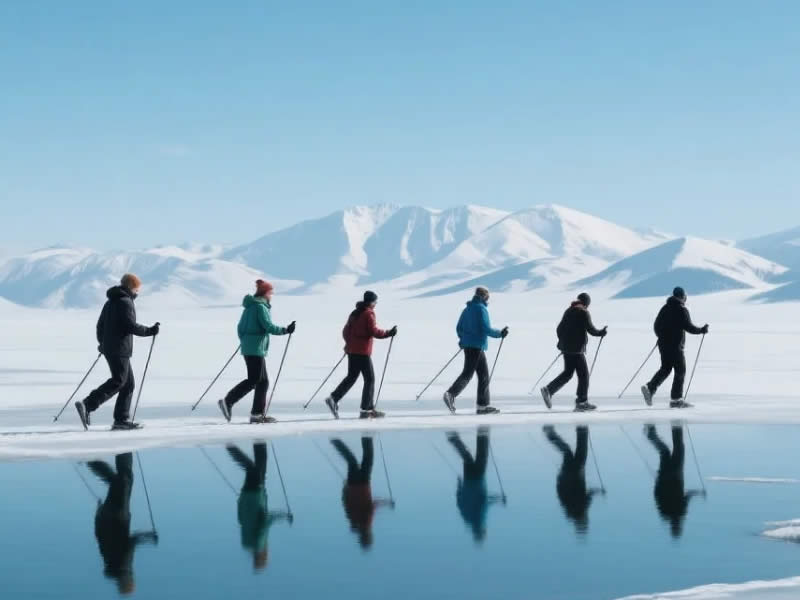
Recommended trekking pole purchase link: https://s.click.aliexpress.com/e/_c4M7OWaN
The Role of Walking Poles on Ice
Walking poles provide three primary benefits when crossing frozen lakes:
- Stability – Poles offer a third and fourth point of contact, helping maintain balance on slick or uneven ice surfaces.
- Weight distribution – Spreading your weight across four points (two feet, two poles) slightly reduces pressure on any single point—though not enough to compensate for thin ice.
- Ice assessment – A pole can be used to probe ahead, testing ice thickness and detecting weak spots before you commit your full weight.
However, poles also introduce risks. Wrist straps can become entanglement hazards if ice breaks. The sharp carbide tips, while useful for grip, can puncture thin ice and actually weaken it. And perhaps most importantly, poles can create a false sense of security, leading hikers to venture onto ice they would otherwise avoid.
Safe Ice Crossing Protocols
Before stepping onto any frozen lake, follow these fundamental safety practices:
1. Know the Ice
Clear, solid ice requires a minimum thickness of 4 inches (10 cm) for walking. White or “snow ice” may require double that thickness. Never rely on appearance alone. Check with local authorities, outfitters, or experienced locals about current ice conditions. Rivers, inlets, and outlets have thinner ice due to current. Pressure ridges, dark spots, and cracks are danger signs.
2. Probe as You Go
Extend one pole to its full length and use it to probe ahead with each step. A consistent, solid thud indicates good ice. A hollow sound, sudden punch‑through, or water seeping up means stop and retreat immediately. Probe in a sweeping arc—ice conditions can change within inches.
3. Spread Out
Never cross a frozen lake in a tight group. Distribute weight by spacing group members 50 feet (15 meters) or more apart. If one person breaks through, others are not caught in the same weak zone and can assist from a safe distance.
4. Remove Wrist Straps
This is critical. If you fall through the ice, wrist straps can become entangled, preventing you from removing your poles and pulling yourself onto the ice. Before stepping onto ice, release wrist straps or remove them entirely. Hold poles loosely—they are tools for probing, not for anchoring.
5. Carry Ice Safety Picks
Walking poles cannot extract you from icy water. Carry ice awls or ice picks—small, handheld spikes worn on a lanyard around your neck or attached to your jacket. If you break through, these picks allow you to claw your way back onto solid ice. Practice using them before you need them.
What Walking Poles Cannot Do
It is essential to understand the limits of walking poles in ice crossing scenarios:
- They are not ice claws – Poles lack the sharp, hand‑held points needed to pull yourself out of a hole in the ice.
- They do not guarantee safety – No pole can make unsafe ice safe. If conditions are questionable, do not cross.
- They can become hazards – Straps and tips can entangle or puncture during a fall, complicating self‑rescue.
Ice Crossing Gear Checklist
For safe travel on frozen lakes, carry:
| Item | Purpose |
|---|---|
| Ice picks / awls | Self‑rescue if you break through |
| Walking poles (with rubber tips optional) | Probing and stability |
| Throw rope | Rescuing others from a distance |
| Waterproof outerwear | Protection if immersed |
| Spare dry clothing in waterproof bag | Hypothermia prevention |
| Headlamp | Visibility during low light |
| Whistle | Signaling for help |
If You Break Through
Despite all precautions, breakthroughs happen. If you fall through ice:
- Stay calm – Panic increases heart rate and accelerates hypothermia.
- Face the direction you came from – The ice you just crossed was stable enough to hold you.
- Use ice picks – Drive them into the ice and kick your feet to pull yourself onto solid ice.
- Roll away – Once on solid ice, roll away from the break to distribute your weight.
- Do not remove poles until safe – If poles are still in hand and without straps, use them as aids, but prioritize ice picks.
- Get warm immediately – Hypothermia can set in quickly. Change into dry clothing and seek shelter.
Final Thoughts
Walking poles are valuable companions on frozen lakes—when used correctly. They help probe for weak ice, provide stability, and distribute weight. But they are not substitutes for proper ice safety knowledge, ice picks, and sound judgment. Always know the ice thickness before stepping out, remove wrist straps, carry self‑rescue tools, and never cross alone. The beauty of a frozen lake is best enjoyed from a position of safety. With the right practices and a healthy respect for winter’s hidden dangers, your poles can help you explore winter landscapes while keeping you secure on the ice.




