




Trekking Poles for film crews hiking to locations?
Film crews often find themselves in remote, rugged locations that require hiking to reach the perfect shot. Whether it’s a nature documentary, a wilderness survival show, or a commercial shoot in the mountains, the crew carries heavy camera gear, lenses, tripods, audio equipment, and personal supplies. Every extra pound matters, and every misstep can mean damaged equipment or a delayed production. Trekking poles are an essential tool for these professionals – not just for balance, but for reducing fatigue, preventing falls, and even helping to stabilize camera rigs in the field. However, not all poles are suitable for film crew demands. This article explains what features matter most for camera teams, recommends specific models, and offers practical tips for using poles on set.
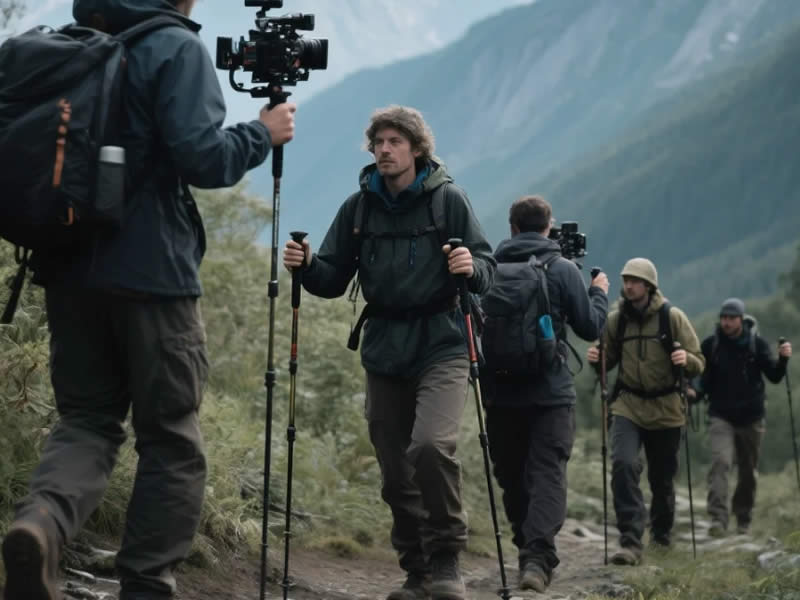
Recommended trekking pole purchase link: https://s.click.aliexpress.com/e/_c4M7OWaN
Why Film Crews Need Specialized Trekking Poles
Unlike recreational hikers, film crews face unique challenges:
- Heavy, unbalanced loads – A camera backpack may weigh 30–50 lbs (14–23 kg), often with awkward shapes. Poles help distribute weight and improve stability.
- Frequent stops and starts – Crews hike, set up, shoot, pack up, and hike again. Poles must be easy to collapse and redeploy quickly.
- Quiet operation – Carbide tips clicking on rocks can ruin a wildlife audio take. Rubber tips are essential.
- Durability – Gear is used daily, often in wet, muddy, or dusty conditions. Poles must withstand abuse.
- Versatility – Poles can double as light stands, boom poles, or emergency splints.
Key Features for Film Crew Poles
1. Aluminum Shafts – No Carbon Fiber
Carbon fiber is lightweight but brittle. A carbon pole can snap when wedged between rocks or used as a makeshift support for a camera. Aluminum (especially 7075 alloy) bends before breaking and is often field‑repairable. For film crews who may need to improvise, aluminum is the safer choice.
2. Flip Locks (Lever Locks) – Not Twist Locks
Flip locks are faster to adjust, provide a clear visual lock, and are less likely to slip under heavy loads. When you’re rushing to set up a shot, you don’t want to fiddle with twist locks. Flip locks also work well with gloves.
3. Cork Grips for Comfort
Crews may hike for hours while carrying heavy packs. Cork grips are the most comfortable for long periods – they mold to your hand, wick sweat, and stay cool. Foam grips wear out quickly; rubber becomes sticky. Cork is the professional’s choice.
4. Rubber Tips (Paws) – Mandatory for Audio
Carbide tips are loud on rock and can damage fragile alpine vegetation. Rubber tips should be used at all times during filming hikes. They also protect floors when poles are brought into lodges or vehicles. Keep multiple spare sets in your gear bag.
5. Interchangeable Baskets
Depending on terrain (sand, mud, snow), you may need larger baskets to prevent poles from sinking. Choose poles with easily swappable baskets. Small baskets are fine for hardpack; carry larger ones as needed.
6. Quick‑Release Wrist Straps (Optional but Helpful)
Systems like Leki’s Trigger allow you to detach the pole instantly – useful when you need free hands to grab a camera or adjust a tripod. Standard padded straps are fine, but quick‑release adds convenience.
7. Bright Colors for Visibility
In a busy set, black poles can be lost or left behind. Bright orange, red, or yellow poles are easy to spot. They also serve as visual markers for camera positions.
Top Trekking Poles for Film Crews
1. Leki Makalu (Aluminum, Cork Grip)
- Shaft: 7075 aluminum
- Locks: SpeedLock (metal flip lock)
- Grip: Cork with extended foam choke grip
- Tips: Replaceable carbide (use rubber covers)
- Baskets: Interchangeable
- Weight: ~260g per pole
- Price: $120–160
- Why it’s great: Bombproof, comfortable, and every part is replaceable. The extended grip allows you to choke down for steep traverses. Trusted by professional guides and film crews.
2. Black Diamond Trail Ergo Cork
- Shaft: Aluminum
- Locks: FlickLock (metal cam)
- Grip: Cork with ergonomic shape
- Tips: Replaceable carbide
- Weight: ~270g
- Price: $130–150
- Why it’s great: The FlickLock is legendary for reliability. Ergonomic grip reduces wrist fatigue. A solid workhorse.
3. Cascade Mountain Tech Aluminum (Budget Option)
- Shaft: 6061 aluminum
- Locks: Flip locks
- Grip: Cork
- Tips: Replaceable
- Weight: ~240g
- Price: $50–70
- Why it’s great: Affordable enough to buy several pairs for a crew. Good durability for the price. Replaceable tips and baskets.
Practical Tips for Using Poles on Film Sets
- Always use rubber tips – Carry a 4‑pack of spares. They wear out faster than carbide, especially on rocky trails.
- Adjust pole length for different tasks – When hiking with a heavy pack, set poles slightly longer than usual for better leverage. When using a pole as a light stand, extend it fully.
- Mark your poles – Use colored tape or engraving to identify each crew member’s poles. On multi‑day shoots, poles get mixed up.
- Pole as a monopod – Some camera operators use a trekking pole as an improvised monopod for static shots. Attach a 1/4‑20 screw adapter to the grip top (available as an accessory).
- Quiet planting – Practice planting the rubber tip without stabbing – a gentle placement avoids thumping sounds that could ruin audio.
- Pack a repair kit – Carry spare rubber tips, a small screwdriver (for flip lock screws), and a few zip ties (temporary lock fix). A bent aluminum section can often be straightened by hand.
Noise Considerations for Wildlife Filming
If you’re filming skittish animals, even rubber tips can make a soft thump. In such cases, consider:
- Wrapping the tip with a piece of moleskin or felt (temporary).
- Using a wooden staff (natural material, quieter) – but less adjustable.
- Walking without poles for the final approach.
Carrying Poles When Not in Use
Film crews often need free hands for cameras. Use a pole quiver (shoulder strap) that attaches to your backpack, allowing you to carry poles on your back. Alternatively, collapse the poles and store them in a side pocket of your pack.
Final Thoughts
For film crews hiking to remote locations, trekking poles are not a luxury – they are a productivity tool that reduces fatigue, prevents equipment‑damaging falls, and even doubles as camera support. Choose durable aluminum poles with flip locks, cork grips, rubber tips, and interchangeable baskets. The Leki Makalu and Black Diamond Trail Ergo are top‑tier choices, while Cascade Mountain Tech offers a budget‑friendly alternative. Invest in spare rubber tips and a small repair kit. With the right poles, your crew will arrive at the location less tired, more stable, and ready to capture the perfect shot – without the sound of clicking carbide ruining the audio. Happy filming and safe trails.




