




Scientific research expeditions – Trekking Pole requirements?
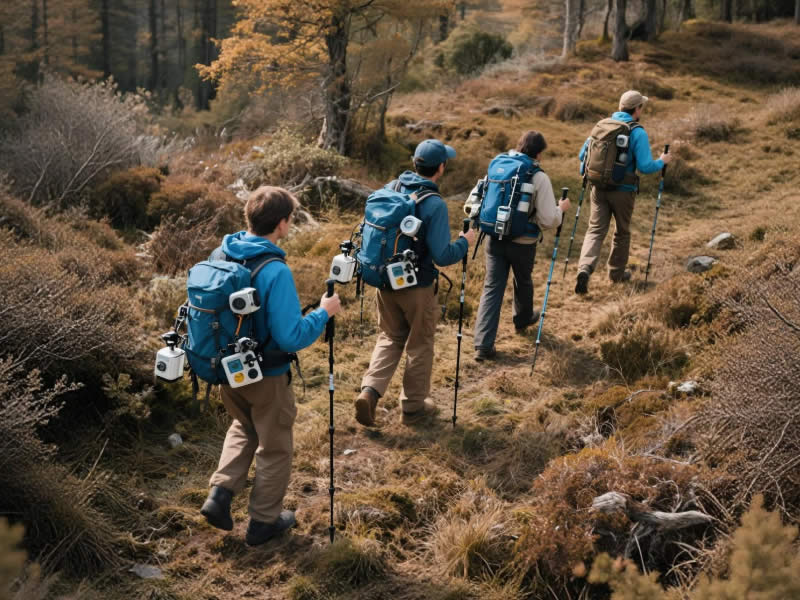
Scientists who work in remote wilderness – biologists tracking wildlife, geologists sampling rock formations, ecologists surveying vegetation – often hike for days or weeks carrying heavy scientific equipment. For these researchers, trekking poles are not merely a comfort; they are essential tools for safety, efficiency, and even data collection. But the poles that suit a weekend hiker may be inadequate for a scientific expedition. This article outlines the specific requirements for trekking poles used in research fieldwork, from durability and repairability to noise reduction and multi‑functionality.
Recommended trekking pole purchase link: https://s.click.aliexpress.com/e/_c4M7OWaN
Why Research Expeditions Demand More from Poles
Field scientists face conditions that go beyond typical recreational hiking:
- Heavy, unbalanced loads – Backpacks filled with sampling gear, GPS units, cameras, and sample containers can weigh 30–50 kg (65–110 lbs). Poles must support this extra weight without collapsing.
- Long duration – Expeditions may last weeks or months. Poles must be durable enough to withstand daily use in abrasive environments (sand, salt, volcanic rock).
- Remote locations – Resupply or replacement is impossible. Poles must be field‑repairable with simple tools.
- Quiet operation – Wildlife researchers need to avoid scaring animals. Loud carbide tips clicking on rocks or squeaking locks are unacceptable.
- Multi‑functionality – Poles can double as measuring sticks, antenna masts, or emergency splints.
Key Requirements for Expedition Poles
1. Material: 7075 Aluminum – No Carbon Fiber
Carbon fiber is lightweight but brittle. A carbon pole can snap when wedged between rocks or when used to support a heavy pack on a sidehill. In remote areas, a broken pole cannot be replaced. 7075 aluminum (aircraft‑grade) offers the best strength‑to‑weight ratio and will bend rather than snap. A bent aluminum section can often be straightened in the field with a rock or by hand.
2. Locking Mechanism: Metal Flip Locks Only
Plastic flip locks break. Twist locks slip when dirty or cold. For expedition use, choose metal flip locks (e.g., Leki SpeedLock, Black Diamond FlickLock). These are field‑serviceable with a small screwdriver or even a coin. Carry a spare locking screw and lever in your repair kit.
3. Replaceable Carbide Tips
Tips wear out quickly when used on rock, gravel, or ice. Non‑replaceable tips mean the entire pole becomes useless once the tip rounds. Choose poles with user‑replaceable carbide tips (screw‑in or press‑fit). Pack at least two spare tips per pole.
4. Rubber Tips for Noise Reduction
For wildlife research, carbide tips are too loud. Rubber tip covers (paws) dampen sound and prevent clicking on rock. Use them at all times when noise is a concern. Bring multiple spare sets – rubber wears faster than carbide.
5. Interchangeable Baskets
Expeditions cross varied terrain: mud, snow, sand, and hardpack. Standard small baskets are useless in soft ground. Choose poles with interchangeable baskets – carry a set of large “power baskets” for mud/snow and standard baskets for summer trails.
6. Cork Grips for Long‑Term Comfort
Foam grips wear out and absorb sweat, becoming stinky. Rubber grips become sticky in heat. Cork grips are naturally antimicrobial, comfortable, and durable. They mold to your hand over time, reducing fatigue during long days.
7. Extended Grip (Choke Grip)
When traversing steep slopes or carrying a heavy pack, you often need to hold the pole lower. An extended foam or rubber section below the main grip allows you to choke down without gripping the cold aluminum shaft.
8. Strong, Quick‑Release Wrist Straps
Wide, padded straps distribute force and prevent chafing. Quick‑release systems (e.g., Leki Trigger) let you detach the pole instantly – crucial if you need free hands for a camera or if the pole gets caught in a crevice. Fixed straps can cause shoulder injury in a fall.
9. Bright Colors for Visibility
In dense vegetation or low light, a dropped pole can be hard to find. Bright orange, red, or yellow poles are easier to spot. They also serve as visual markers for transect lines.
Recommended Poles for Scientific Expeditions
1. Leki Makalu (7075 Aluminum, Cork Grip)
- Why it’s ideal: Bombproof construction, metal SpeedLock levers, replaceable everything (tips, baskets, straps, even shaft sections). Cork grip with extended foam section. Widely available spare parts. Trusted by polar and mountain research teams.
- Weight: ~260g per pole
- Price: $120–160
2. Black Diamond Trail Ergo Cork
- Why it’s ideal: FlickLock is legendary for reliability. Ergonomic cork grip reduces wrist fatigue. Durable aluminum shaft.
- Weight: ~270g
- Price: $130–150
3. Komperdell Expedition Cork
- Why it’s ideal: 7075 aluminum, Power Lock 2.0 metal levers, large power baskets included. European quality, used by alpine research stations.
- Weight: ~280g
- Price: $140–180
4. Cascade Mountain Tech Aluminum (Budget Expedition Option)
- Why it’s ideal: Affordable enough to buy multiple pairs for a research team. 6061 aluminum (less strong than 7075 but still durable). Flip locks, cork grips, replaceable tips. Good for shorter expeditions or as loaner poles.
- Weight: ~240g
- Price: $50–70
Field Repair and Spare Parts Kit
For any expedition longer than a week, carry:
- 2 spare carbide tips per pole
- 4 spare rubber tip covers
- Spare flip lock lever and screw (for your pole model)
- Small Phillips screwdriver (or multi‑tool)
- Zip ties (temporary lock repair)
- Duct tape (wrapped around a pole section)
- Small tube of silicone lubricant (for shafts, not locks)
Additional Uses in Research
- Measuring stick – Poles have length markings (cm). Use them to measure snow depth, vegetation height, or rock dimensions.
- Antenna mast – Tape a VHF antenna or GPS receiver to an extended pole for better signal.
- Transect marker – Plant brightly colored poles at intervals to mark study plots.
- Emergency splint – In case of injury, poles can immobilize a fractured limb.
- Tarp support – Quickly rig a field lab or rain shelter.
Noise and Wildlife Considerations
For ornithologists or mammalogists, silence is critical. Use rubber tips and also consider:
- Wrapping the lower shaft with moleskin to soften accidental strikes against rocks.
- Avoiding flip lock squeaks – apply a dry lubricant (graphite) to metal‑on‑metal contact points.
- Walking with poles raised during final approach to an observation point.
Final Thoughts
Scientific research expeditions demand trekking poles that are durable, repairable, quiet, and versatile. The ideal pole is made of 7075 aluminum, has metal flip locks, replaceable carbide tips, cork grips, and interchangeable baskets. Models like the Leki Makalu, Black Diamond Trail Ergo, and Komperdell Expedition are proven in extreme environments. For budget‑conscious teams, Cascade Mountain Tech offers acceptable durability at a lower price. Always carry a repair kit with spare tips, levers, and zip ties. With the right poles, researchers can hike farther, work more efficiently, and return with better data – and without a broken pole jeopardizing the expedition. Safe fieldwork.




