




What Is the Difference Between Walking Poles and Trekking Poles?
At first glance, a pole is a pole. Yet the slender aluminum or carbon shaft in your hand tells a distinct story about its intended purpose. Walking poles and trekking poles are often used interchangeably in casual conversation, but they are fundamentally different tools, engineered for different activities, terrains, and biomechanical objectives. Using the wrong type for your activity can lead to suboptimal performance, premature wear, or even safety hazards. This guide dissects the critical distinctions—design, materials, features, and intended use—to help you select the right pole for your adventure.
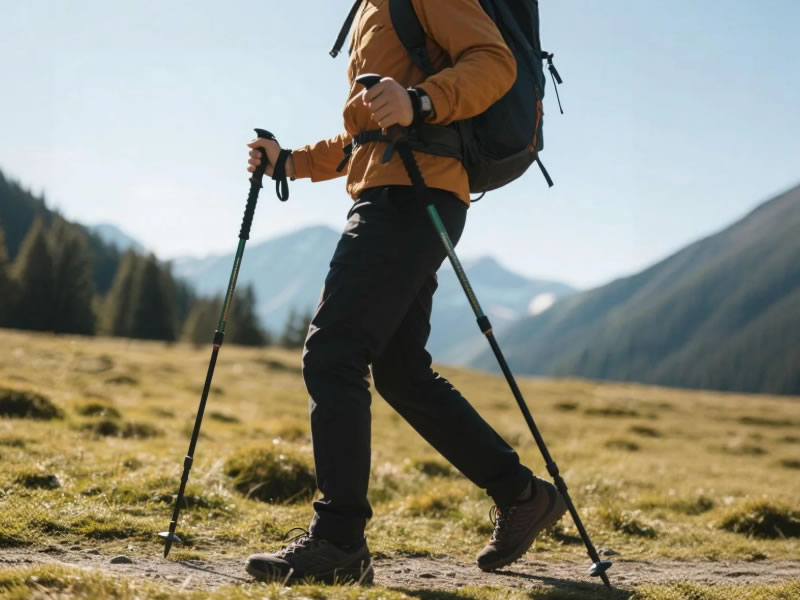
Recommended trekking pole purchase link: https://s.click.aliexpress.com/e/_c4M7OWaN
The Core Philosophical Difference
Trekking Poles (Hiking Poles): Designed for variable, rugged, unpredictable terrain. Their primary objectives are stability, joint protection, load support, and adaptability. They are tools for wilderness travel.
Walking Poles (Nordic Walking Poles): Designed for fitness-oriented walking on consistent, predictable surfaces (pavement, boardwalks, groomed trails). Their primary objective is enhancing the natural walking gait to increase calorie burn and engage the upper body. They are tools for cardiovascular exercise.
This philosophical divergence manifests in every design decision.
1. Length and Adjustability
| Feature | Trekking Poles | Walking Poles |
|---|---|---|
| Length | Adjustable (telescoping or folding). Typically 3-section. | Fixed length. Rarely adjustable. |
| Rationale | Terrain changes constantly. Shorten for steep climbs; lengthen for descents. | Walking gait is consistent. Fixed length optimizes Nordic walking technique. |
| Sizing | Sized dynamically on the trail. | Sized to exact user height (usually height x 0.68). |
Implication: If you need one pole that adapts to mountains, valleys, and everything between, you need trekking poles. If you walk the same rail-trail daily and want perfect fitness form, walking poles are sufficient.
2. Tip Design and Traction
| Feature | Trekking Poles | Walking Poles |
|---|---|---|
| Standard Tip | Sharp, durable carbide (tungsten) tip. | Removable rubber foot with angled, treaded pattern. |
| Purpose | Bite into rock, ice, hard-packed dirt, and scree. | Grip pavement and hard surfaces without slipping or damaging the surface. |
| Secondary Option | Rubber tip protectors available for pavement use. | Interchangeable carbide tip (under rubber foot) for occasional soft trails. |
| Sound | Distinctive "clack" on rock. | Silent, muffled contact. |
Implication: Trekking poles without rubber tips will damage paved surfaces and wooden boardwalks and are dangerously slippery on wet pavement. Walking poles without carbide tips will not grip on steep, loose, or icy backcountry terrain.
3. Grip Design and Angle
| Feature | Trekking Poles | Walking Poles |
|---|---|---|
| Grip Angle | Straight or slightly ergonomic. | Pronounced forward angle (typically 15°). |
| Rationale | Neutral wrist position for varied terrain and load bearing. | Promotes proper Nordic walking technique: pole plants behind the body, hand opens at end of push. |
| Strap | Padded, adjustable; designed for downward weight transfer. | Detachable "gloveless" strap system; often integrated into grip. |
Implication: Attempting Nordic walking with straight-grip trekking poles forces an awkward wrist angle. Using angled walking poles on steep terrain reduces leverage and control.
4. Shaft Material and Weight
| Feature | Trekking Poles | Walking Poles |
|---|---|---|
| Material | Aluminum (6061/7075) or Carbon Fiber. | Almost exclusively lightweight carbon fiber. |
| Weight | Moderate to lightweight (16-24 oz per pair). | Ultralight (12-18 oz per pair). |
| Durability | Built to withstand impacts, abrasion, and heavy loads. | Built for low-impact, consistent use on forgiving surfaces. |
Implication: Walking poles are generally too fragile for aggressive backcountry use. Trekking poles are heavier than optimal for pure fitness walking.
5. Baskets and Accessories
| Feature | Trekking Poles | Walking Poles |
|---|---|---|
| Baskets | Interchangeable: small for summer, large for snow/mud. | No baskets. Not needed on pavement. |
| Accessories | Rubber tip protectors, snow baskets, mud baskets, replacement tips. | Dedicated asphalt feet, rolling tips (ferrules), pavement pads. |
Implication: Walking poles lack the flotation needed for soft surfaces. Trekking poles require accessory changes for optimal pavement use.
6. Technique and Biomechanics
| Aspect | Trekking Poles | Walking Poles |
|---|---|---|
| Plant Position | Ahead of body (descent) or beside/behind (ascent). | Behind the body's centerline. |
| Motion | Plant, load, push. | Plant, push, release grip at end of follow-through. |
| Upper Body Engagement | Significant. | Maximal. Nordic walking recruits full shoulder girdle. |
| Primary Goal | Stability, load transfer, propulsion. | Calorie burn, cardiovascular fitness. |
Implication: You cannot "power walk" effectively with trekking poles. You cannot descend a scree slope safely with Nordic walking poles.
Which One Do You Need? A Decision Framework
Choose Trekking Poles IF:
- You hike on uneven, rocky, steep, or off-trail terrain.
- You carry a backpack over 15 pounds.
- You have knee, hip, or ankle concerns requiring impact reduction.
- You need adaptability for varying conditions.
- You are backpacking, mountaineering, or snowshoeing.
Choose Walking (Nordic) Poles IF:
- You primarily walk on paved paths, boardwalks, or well-groomed gravel trails.
- Your primary goal is fitness, calorie burn, and cardiovascular health.
- You never carry a heavy pack.
- You value ultralight weight and simplicity over ruggedness.
The Gray Area: Can They Be Used Interchangeably?
Yes, but with compromises.
- Using trekking poles for fitness walking: Acceptable. Install rubber tip protectors to prevent surface damage and reduce noise. The straight grip will be slightly less ergonomic for Nordic technique, but you will still benefit from upper-body engagement.
- Using walking poles for light trails: Acceptable only on smooth, non-technical, dry trails. Remove rubber feet to expose the small carbide tip underneath (most quality walking poles include this). The fixed length will be suboptimal for steep grades, and the lack of baskets will cause sinking in soft surfaces. Not recommended for backpacking or mountain terrain.
Conclusion: Two Tools, Two Jobs
The distinction between walking poles and trekking poles is not marketing jargon; it is functional specialization. Trekking poles are rugged, adaptable tools engineered for the unpredictability of the wilderness. Walking poles are precision fitness instruments optimized for the consistency of the urban and suburban landscape.
Selecting the wrong tool does not render it useless, but it does mean you are hiking with one hand tied behind your back. Match the pole to the terrain, and you unlock its full potential—whether that potential is saving your knees on a 2,000-foot descent or torching calories on a sunrise power walk. Choose wisely, and your poles will reward you with miles of comfortable, efficient, and enjoyable movement.




