




Hiking Poles and Lightning Risk: Are They a Safety Concern?
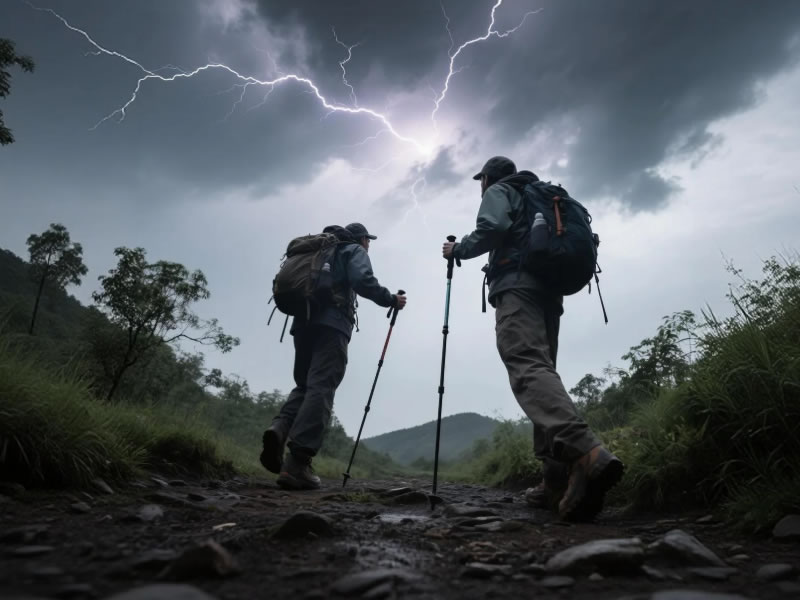
For many hikers, trekking poles are indispensable gear. They provide stability, reduce joint impact, and improve endurance. However, when dark clouds gather and the first rumble of thunder echoes in the distance, a critical question arises: Could the very tool that aids your hike become a lethal hazard? The short answer is yes, hiking poles can increase your lightning risk, but understanding the context and proper response is key to staying safe.
Recommended trekking pole purchase link: https://s.click.aliexpress.com/e/_c4M7OWaN
Understanding the Real Threat
Lightning is a massive electrical discharge seeking the path of least resistance to the ground. It is attracted to tall, pointed, and isolated objects—a description that, in an open landscape, can fit a person holding metal poles upright. The primary risk is not that the poles will "attract" lightning from a great distance, as is sometimes mistakenly believed. Rather, if a lightning strike is already imminent in your immediate area, protruding metal objects can provide a more conductive pathway for the current to travel through you.
Think of it this way: during a electrical storm, your goal is to make yourself as low and uninteresting a target as possible. Holding two metal poles above your shoulders effectively increases your height and creates two sharp, conductive points. This can be particularly dangerous above the tree line, in open meadows, or on ridge lines where you are the most prominent feature.
Material Matters: Aluminum vs. Carbon Fiber
Not all poles pose an equal theoretical risk:
- Aluminum Poles: Being highly conductive, they present a clearer potential pathway for current.
- Carbon Fiber Poles: While often marketed as "non-conductive," this is misleading in the context of a lightning strike's immense power. Carbon fiber is a poorer conductor than aluminum, but it is not an insulator against millions of volts. A direct or nearby strike will likely travel through carbon fiber as well. The key difference is minimal in a real-life strike scenario.
The Critical Safety Protocol: What to Do When Thunder Roars
The focus should never be on your gear material, but on your immediate actions. Your poles are a manageable variable. Follow this life-saving protocol:
- Seek Shelter Early: The moment you hear thunder, see lightning, or notice threatening clouds, your hike is over. Immediately descend from exposed areas and head toward a substantial building or a fully enclosed, metal vehicle. Do not wait.
- If Caught in the Open: When no shelter is reachable, avoid isolated trees, cliff edges, and water. Move to a lower elevation.
- Assume the Lightning Safety Position: Crouch down on the balls of your feet to minimize contact with the ground. Keep your feet close together. Crucially, discard your hiking poles (and any other metal gear like frames or crampons) at least 100 feet away from you. Do not hold them, and do not lay them beside you.
- Wait it Out: Remain in position until at least 30 minutes have passed after the last clap of thunder.
Conclusion: A Manageable Risk
Hiking poles are a minor factor within the larger, severe danger of a thunderstorm. They are not a concern under fair weather. The true safety concern is failing to respect the weather and not taking immediate, correct action. By prioritizing early shelter and knowing how to properly distance yourself from all conductive gear—including your trusted poles—you dramatically reduce your overall risk. Always remember: no summit or viewpoint is worth jeopardizing your life. Your poles are tools for the journey, but storm safety knowledge is your most vital piece of equipment.




